The End of Sanded-Down Influence
Be the first to know about every new letter.
No spam, unsubscribe anytime.
Across sports, retail, interviews, workplace virality, and even animal storytelling, the signals are aligning: the era of over-managed influence is losing ground to precisely placed humanity.
For decades, success was engineered.
Public image was controlled.
Distribution was centralized.
Personality was calibrated to fit every door.
But across five very different corners of culture, we are watching the same pattern emerge:
When the feathers show, the flock follows.
1. Alysa Liu
Links: Instagram | Olympic Gold Performance 2026
Alysa Liu didn’t just win gold. She built leverage.
Her social following jumped by millions this month (The figure skating star jumped from 210,000 Instagram followers to a staggering 4.8 million after she earned two gold medals at this month’s Milano Cortina Winter Games.) not because she was perfectly packaged, but because she wasn’t. The striped hair. The piercings. The unfiltered reactions. The visible joy.
Liu’s moment thrives on nonlinear connectivity. Social platforms dissolve distance between audience and athlete; moments of joy are clipped, shared, remixable. Her persona isn’t curated to fit into every corporate door: it’s relatable, raw, multivalent, and endlessly shareable.
Instead of polishing away personality to maximize universal likability, modern influence often leverages individuality exactly as it is.
That changes the sponsorship equation. Brands aren’t just buying podium visibility, they’re buying access to an audience that aggregated around her independently.
When attention compounds without corporate mediation, the athlete becomes the platform.
She doesn’t fit the brand.
The brand pays to fit her.
2. Staples Baddie
Links: TikTok | 6.5M Viewed Video
The “Staples Baddie” is not a campaign.
She’s a store associate who started filming TikToks during her shift, casually explaining printing services, showing custom mugs, walking viewers through products in her own tone. Chill. Confident. Unfiltered.
No studio lighting. No agency script. No executive sign-off.
Her videos are pulling millions of views. People are saying they want to go to Staples because of her. Another employee even joked that she “ruined his life” because now the stores are busy. She is driving measurable cultural traction for a legacy retailer that has struggled to feel relevant online. Influenced store traffic without ever being promoted, contracted, or formally empowered.
The next breakout moments won’t come from fitting into a brand template. They’ll arise from leveraging one’s own voice in context, creating shared rituals and inside jokes with an audience, and inviting participation instead of broadcasting at people.
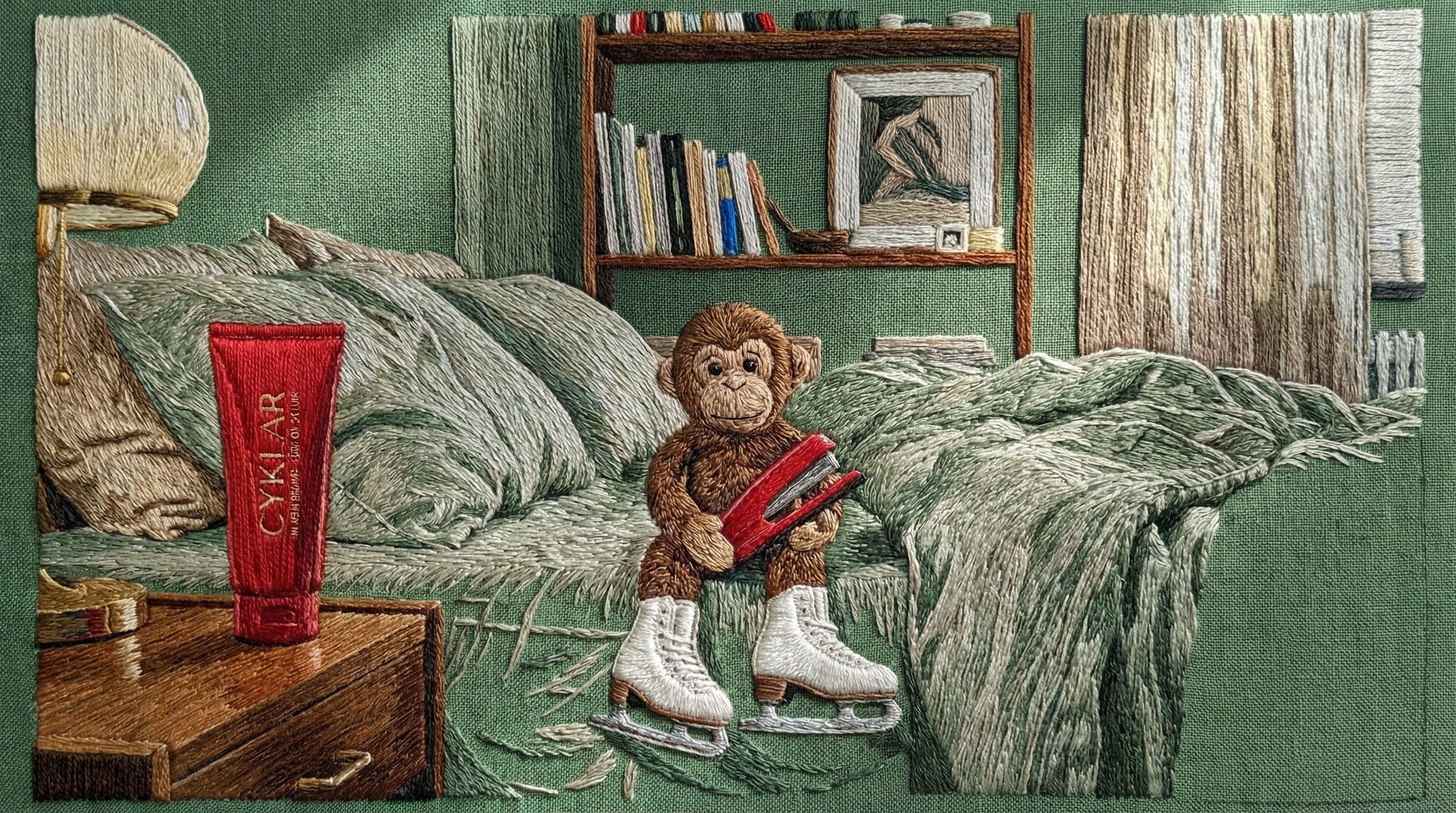
3. Punch the Monkey
Punch is a baby macaque at Japan’s Ichikawa Zoo.
Shortly after birth, he was rejected by his mother and left without protection inside a zoo enclosure. Caretakers gave him a stuffed toy to cling to, a soft substitute in place of what he lost. The footage shows him small, isolated, gripping that toy while older monkeys move around him.
Clips spread across TikTok and Instagram. Fan art appeared within days. Comment sections turned into collective therapy sessions. People projected their own stories onto him: loneliness, resilience, attachment, comfort.
Social media didn’t just make Punch famous: it turned empathy into traffic, traffic into revenue, and a stuffed toy into a sold-out global product.
4. In Your Dreams with Owen Thiele
Links: YouTube | 3.3M Viewed Video
Owen Thiele is a writer, actor, and internet-native cultural figure known for his sharp, socially fluent humor. His show, In Your Dreams, places high-profile guests in a setting that feels disarmed: lounging on a bed, relaxed, slightly undone, inside a room that reads as culturally current rather than institutionally polished.
Appearing in a traditional studio signals: I’m here to promote something.
Appearing causal: You’re seeing me off-duty.
In a tiered fame economy, being seen overly polished reads transactional. Being seen relaxed, joking, leaning back, slightly unguarded; reads socially powerful.
They’re not promoting.
They’re participating.
That participation generates social credit.
And social credit converts to market durability.
5. Cyklar
Links: Explore the Products | Founder’s YouTube
Cyklar is a body care brand built around refillable, minimalist packaging and performance-driven formulas: body washes, lotions, deodorants, and scrubs designed to feel elevated but accessible. The aesthetic is clean. The ingredients are intentional. The brand language is modern and restrained.
But the real product was attention.
The founder didn’t wait for shelf space.
She built visibility where attention already lived…on the feed. She showed the product in use. She answered questions publicly. She built trust in the comment section. She let the algorithm become her foot traffic.
Consistent sales. Repeat buyers. Public proof of demand.
And now you can find Cyklar at Sephora.
Cyklar demonstrates a future-forward model:
Build digital foot traffic first.
Convert community into purchasing behavior.
Use engagement metrics as negotiation capital.
The future brand doesn’t ask: “How do I get in?”
It asks: “How do I build enough traffic that they call me?”
Our Future
Across sports, retail, zoos, interviews, and even office shifts….
Different industries. Same pattern.
Let’s chat again soon...
Gibz
My mission is to
Help you create and earn on your terms.
No spam, unsubscribe anytime.