Brand & Influence

3 min read

Sports Performing Online
Be the first to know about every new letter.

No spam, unsubscribe anytime.

In sports, and in marketing, what happened before is often the most powerful way to shape what comes next. A buzzer-beater shot, a whispered courtside comment, the texture of the gear that once made you feel unstoppable…these aren’t just memories. They’re building blocks.

Past wins build identity. They remind your audience of how far they’ve come, what they’ve felt, who they’ve cheered for, and why it all mattered. But the most strategic content doesn’t stop at nostalgia—it activates it.

It replays the past not for the sake of comfort, but for confidence.

Play with Sound

Watch it Here

Humans are wired to lean in when they overhear something just slightly out of reach. By amplifying mic’d-up gossip, squeaking sneakers, or the ambient thud of a tennis ball, this tactic creates a sensory bridge that pulls the viewer into the action.

  • Why it works: It taps into our parasocial longing, the desire to feel close to people we admire. When the audio makes you feel like you’re right there, it turns a viewer into a participant.

  • Marketing Insight: This is experience-driven storytelling. Sound is memory. Play it right, and your brand becomes the soundtrack to someone’s favorite game day.

Play with Texture

Watch it Here

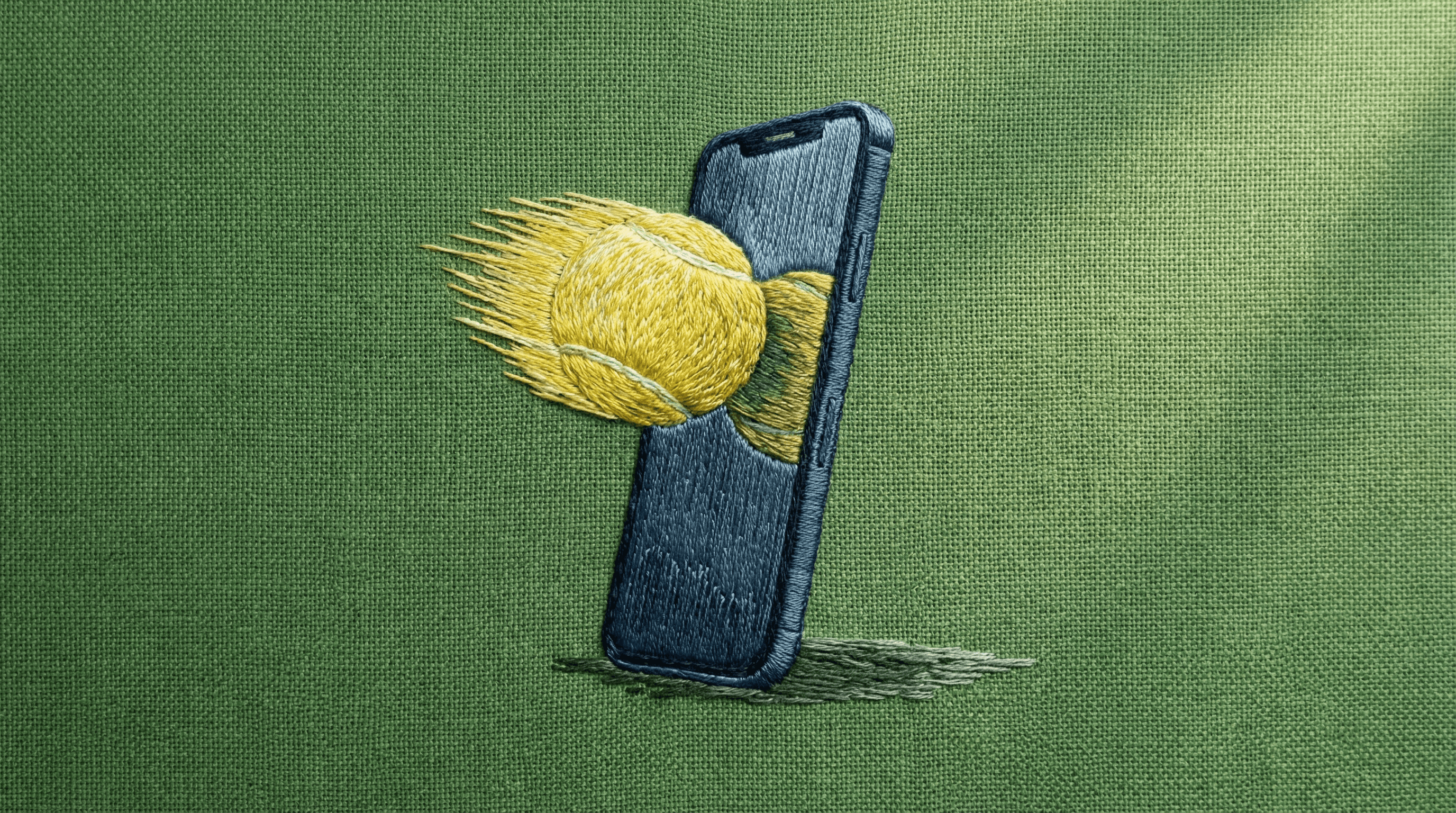
The human brain responds powerfully to implied texture. When we see fuzzy visuals that mimic felt, wool, or clay, we recall touch. Turning a tennis ball into a soft, fuzzy overlay doesn’t just match the object—it mirrors the feeling of familiarity, comfort, and nostalgia.

  • Why it works: Tactile design grounds digital content in the physical world. It stirs memory and encourages emotional projection, the viewer doesn't just see the content, they begin to feel it.

  • Marketing Insight: Texture can signal luxury (e.g., velvet backgrounds) or authenticity (e.g., torn paper). Use it to match your emotional intent, not just the sport.

Play with Mediums

Watch it Here

When you mix media: newsprint headlines, sticker overlays, graffiti textures, you’re not just decorating a post. You’re telling the brain: this is culture. This content has roots, rebellion, reverence.

  • Why it works: Mixed media builds emotional credibility. It tells the viewer this isn’t mass-produced—it’s curated. Like a gallery wall, it invites interpretation and devotion.

  • Marketing Insight: If you want to build fandom, give your content soul. Use visual clues that feel handcrafted, like a love letter to the sport. That’s what turns an audience into a tribe.

Play with Dimensions

Staged microphones, real impact, because optics are everything.

Watch it Here

Strategic use of negative space and cropping isn’t an aesthetic, it’s a power move. When you isolate a player with white space, you elevate them. When you crop an action shot to exaggerate movement, you electrify it.

  • Why it works: Our brains respond to contrast and hierarchy. What’s large feels important. What’s framed feels chosen. What’s cut off feels fast.

  • Marketing Insight: Dimension is a storytelling tool. Use space to emphasize emergence, momentum, or focus. Make people not just see your brand, but feel where it's going.

Play with Motion

Watch it Here

A still image with one moving element, like a biker’s head turning, activates the viewer’s attention without overwhelming their cognition. It’s the equivalent of someone catching your eye across a room.

  • Why it works: Motion tells a story. When done subtly, it conveys time passing, a story unfolding. A blink. A turn. A shift. That’s enough to communicate arrival, departure, celebration, or quiet reflection.

  • Marketing Insight: Use partial motion to create emotional beats. Still frame = anticipation. Small movement = tension. Pull the viewer into a moment that feels suspended in time.

Bottom Line

What once was highlight… can now be launchpad.
By marketing the past in a way that’s emotionally vivid and visually dimensional, you don’t just build loyalty, you build readiness.

The next season. The next drop. The next big game.
Use what they already loved to help them imagine what they’ll love next.

The past isn’t passive…it’s proof. Use it. Show it. Share it.
And always, play it forward.

Let’s chat again soon…

Gibz

In sports, and in marketing, what happened before is often the most powerful way to shape what comes next. A buzzer-beater shot, a whispered courtside comment, the texture of the gear that once made you feel unstoppable…these aren’t just memories. They’re building blocks.

Past wins build identity. They remind your audience of how far they’ve come, what they’ve felt, who they’ve cheered for, and why it all mattered. But the most strategic content doesn’t stop at nostalgia—it activates it.

It replays the past not for the sake of comfort, but for confidence.

Play with Sound

Watch it Here

Humans are wired to lean in when they overhear something just slightly out of reach. By amplifying mic’d-up gossip, squeaking sneakers, or the ambient thud of a tennis ball, this tactic creates a sensory bridge that pulls the viewer into the action.

  • Why it works: It taps into our parasocial longing, the desire to feel close to people we admire. When the audio makes you feel like you’re right there, it turns a viewer into a participant.

  • Marketing Insight: This is experience-driven storytelling. Sound is memory. Play it right, and your brand becomes the soundtrack to someone’s favorite game day.

Play with Texture

Watch it Here

The human brain responds powerfully to implied texture. When we see fuzzy visuals that mimic felt, wool, or clay, we recall touch. Turning a tennis ball into a soft, fuzzy overlay doesn’t just match the object—it mirrors the feeling of familiarity, comfort, and nostalgia.

  • Why it works: Tactile design grounds digital content in the physical world. It stirs memory and encourages emotional projection, the viewer doesn't just see the content, they begin to feel it.

  • Marketing Insight: Texture can signal luxury (e.g., velvet backgrounds) or authenticity (e.g., torn paper). Use it to match your emotional intent, not just the sport.

Play with Mediums

Watch it Here

When you mix media: newsprint headlines, sticker overlays, graffiti textures, you’re not just decorating a post. You’re telling the brain: this is culture. This content has roots, rebellion, reverence.

  • Why it works: Mixed media builds emotional credibility. It tells the viewer this isn’t mass-produced—it’s curated. Like a gallery wall, it invites interpretation and devotion.

  • Marketing Insight: If you want to build fandom, give your content soul. Use visual clues that feel handcrafted, like a love letter to the sport. That’s what turns an audience into a tribe.

Play with Dimensions

Staged microphones, real impact, because optics are everything.

Watch it Here

Strategic use of negative space and cropping isn’t an aesthetic, it’s a power move. When you isolate a player with white space, you elevate them. When you crop an action shot to exaggerate movement, you electrify it.

  • Why it works: Our brains respond to contrast and hierarchy. What’s large feels important. What’s framed feels chosen. What’s cut off feels fast.

  • Marketing Insight: Dimension is a storytelling tool. Use space to emphasize emergence, momentum, or focus. Make people not just see your brand, but feel where it's going.

Play with Motion

Watch it Here

A still image with one moving element, like a biker’s head turning, activates the viewer’s attention without overwhelming their cognition. It’s the equivalent of someone catching your eye across a room.

  • Why it works: Motion tells a story. When done subtly, it conveys time passing, a story unfolding. A blink. A turn. A shift. That’s enough to communicate arrival, departure, celebration, or quiet reflection.

  • Marketing Insight: Use partial motion to create emotional beats. Still frame = anticipation. Small movement = tension. Pull the viewer into a moment that feels suspended in time.

Bottom Line

What once was highlight… can now be launchpad.
By marketing the past in a way that’s emotionally vivid and visually dimensional, you don’t just build loyalty, you build readiness.

The next season. The next drop. The next big game.
Use what they already loved to help them imagine what they’ll love next.

The past isn’t passive…it’s proof. Use it. Show it. Share it.
And always, play it forward.

Let’s chat again soon…

Gibz

In sports, and in marketing, what happened before is often the most powerful way to shape what comes next. A buzzer-beater shot, a whispered courtside comment, the texture of the gear that once made you feel unstoppable…these aren’t just memories. They’re building blocks.

Past wins build identity. They remind your audience of how far they’ve come, what they’ve felt, who they’ve cheered for, and why it all mattered. But the most strategic content doesn’t stop at nostalgia—it activates it.

It replays the past not for the sake of comfort, but for confidence.

Play with Sound

Watch it Here

Humans are wired to lean in when they overhear something just slightly out of reach. By amplifying mic’d-up gossip, squeaking sneakers, or the ambient thud of a tennis ball, this tactic creates a sensory bridge that pulls the viewer into the action.

  • Why it works: It taps into our parasocial longing, the desire to feel close to people we admire. When the audio makes you feel like you’re right there, it turns a viewer into a participant.

  • Marketing Insight: This is experience-driven storytelling. Sound is memory. Play it right, and your brand becomes the soundtrack to someone’s favorite game day.

Play with Texture

Watch it Here

The human brain responds powerfully to implied texture. When we see fuzzy visuals that mimic felt, wool, or clay, we recall touch. Turning a tennis ball into a soft, fuzzy overlay doesn’t just match the object—it mirrors the feeling of familiarity, comfort, and nostalgia.

  • Why it works: Tactile design grounds digital content in the physical world. It stirs memory and encourages emotional projection, the viewer doesn't just see the content, they begin to feel it.

  • Marketing Insight: Texture can signal luxury (e.g., velvet backgrounds) or authenticity (e.g., torn paper). Use it to match your emotional intent, not just the sport.

Play with Mediums

Watch it Here

When you mix media: newsprint headlines, sticker overlays, graffiti textures, you’re not just decorating a post. You’re telling the brain: this is culture. This content has roots, rebellion, reverence.

  • Why it works: Mixed media builds emotional credibility. It tells the viewer this isn’t mass-produced—it’s curated. Like a gallery wall, it invites interpretation and devotion.

  • Marketing Insight: If you want to build fandom, give your content soul. Use visual clues that feel handcrafted, like a love letter to the sport. That’s what turns an audience into a tribe.

Play with Dimensions

Staged microphones, real impact, because optics are everything.

Watch it Here

Strategic use of negative space and cropping isn’t an aesthetic, it’s a power move. When you isolate a player with white space, you elevate them. When you crop an action shot to exaggerate movement, you electrify it.

  • Why it works: Our brains respond to contrast and hierarchy. What’s large feels important. What’s framed feels chosen. What’s cut off feels fast.

  • Marketing Insight: Dimension is a storytelling tool. Use space to emphasize emergence, momentum, or focus. Make people not just see your brand, but feel where it's going.

Play with Motion

Watch it Here

A still image with one moving element, like a biker’s head turning, activates the viewer’s attention without overwhelming their cognition. It’s the equivalent of someone catching your eye across a room.

  • Why it works: Motion tells a story. When done subtly, it conveys time passing, a story unfolding. A blink. A turn. A shift. That’s enough to communicate arrival, departure, celebration, or quiet reflection.

  • Marketing Insight: Use partial motion to create emotional beats. Still frame = anticipation. Small movement = tension. Pull the viewer into a moment that feels suspended in time.

Bottom Line

What once was highlight… can now be launchpad.
By marketing the past in a way that’s emotionally vivid and visually dimensional, you don’t just build loyalty, you build readiness.

The next season. The next drop. The next big game.
Use what they already loved to help them imagine what they’ll love next.

The past isn’t passive…it’s proof. Use it. Show it. Share it.
And always, play it forward.

Let’s chat again soon…

Gibz

My mission is to

Help you create and earn on your terms.

No spam, unsubscribe anytime.

My mission is to

Help you create and earn on your terms.

No spam, unsubscribe anytime.

My mission is to

Help you create and earn on your terms.

No spam, unsubscribe anytime.