Show the Work
Be the first to know about every new letter.
No spam, unsubscribe anytime.
Behind-the-scenes is no longer only intimacy.
It is evidence.
A polished campaign used to be enough. Now polish can make people suspicious. Too clean, too perfect, too smooth, too frictionless, and the audience starts wondering whether the work was made or simply produced by a machine.
So brands are beginning to show the making of the thing as a moral appeal.
Look, humans were here.
Look, effort was involved.
Look, this was not just prompted into existence.
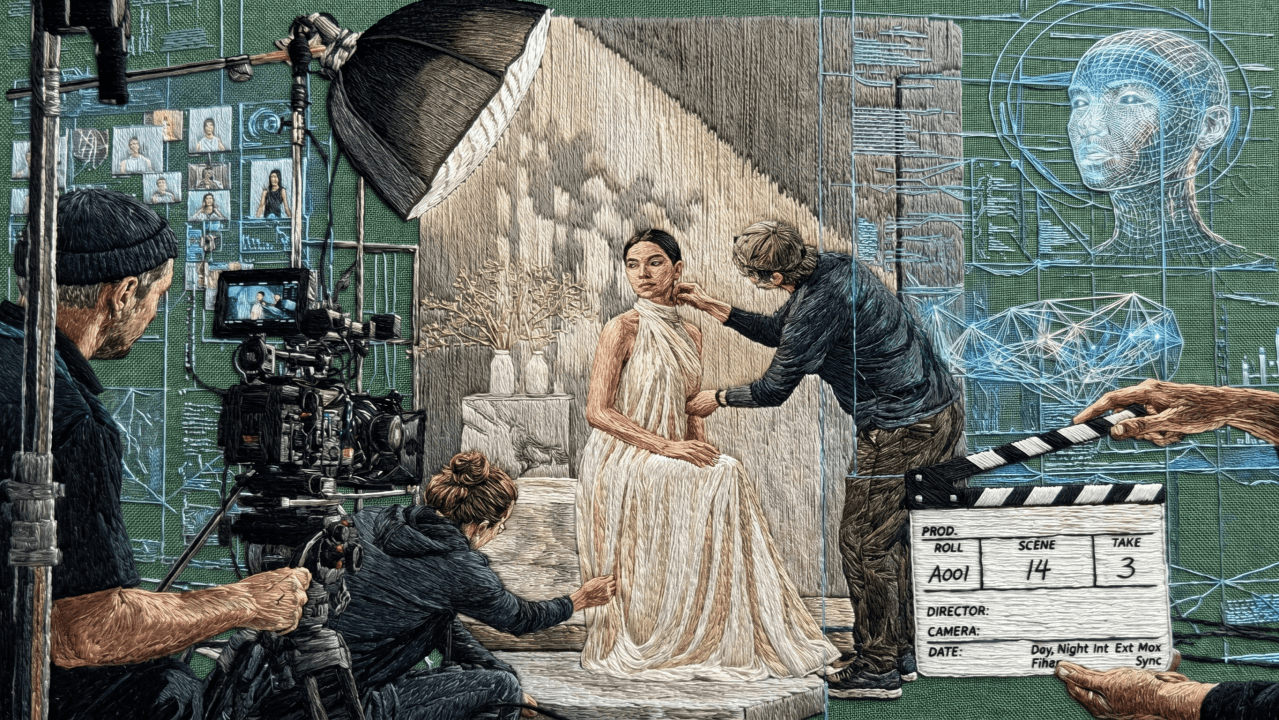
The hands adjusting the dress. The director calling the shot. The actor laughing between takes. The camera catching the chaos around the final polished frame. The messy proof that something lived before it became content.
Apple is already leaning into this. Its recent behind-the-scenes marketing around handmade production, puppets, practical effects, and “Shot on iPhone” craft is not just about showing how beautiful the final ad looks. It is also showing the labor underneath it. The set. The hands. The people. The weird little production details that make the audience feel like: okay, this actually happened.
That matters because the behind-the-scenes material was the second product.
It was filmed, saved, packaged, and dropped because the process now has its own audience.
People want proximity to creation. They want to feel like they were close to the room where it happened. They want the proof of effort, but they also want the social intimacy of being let in.
That is why this trend will not stay with Apple, HBO, or giant entertainment campaigns.
Everyone is going to start doing it.
Small brands. Influencers. Real estate agents. Artists. Actors. Designers. Event planners. Production studios. Coaches. Restaurants. Local businesses.
Because even when the goal is not to prove you avoided AI, behind-the-scenes content still works.
It builds trust.
It gives the audience something to attach to before the final reveal.
It turns the labor into part of the story.
And there is almost no downside.
If the final product is beautiful, behind-the-scenes makes it feel earned.
If the final product is imperfect, behind-the-scenes makes it feel human.
If the audience already trusts you, behind-the-scenes deepens the relationship.
We are entering a year where people will not only ask, “What did you make?”
They will ask, “How did you make it?”
And the brands that can answer that visually will have an advantage.
Because people are tired of being handed perfect things with no fingerprints.
Behind-the-scenes gives the fingerprint back.
Let's chat again soon...
Gibz
My mission is to
Help you create and earn on your terms.
No spam, unsubscribe anytime.