Online Bullying as Distribution
Be the first to know about every new letter.
No spam, unsubscribe anytime.
The algorithm has never emotionally understood the difference between: love, hate, admiration, mockery, support, or humiliation.
It only understands signals.
Did people stop scrolling?
Did they comment? Did they repost it?
Did they make videos about it?
Did they search the name afterward?
Did they emotionally react enough to participate?
That’s all the system sees. Movement.
And humans move the most when emotionally activated.
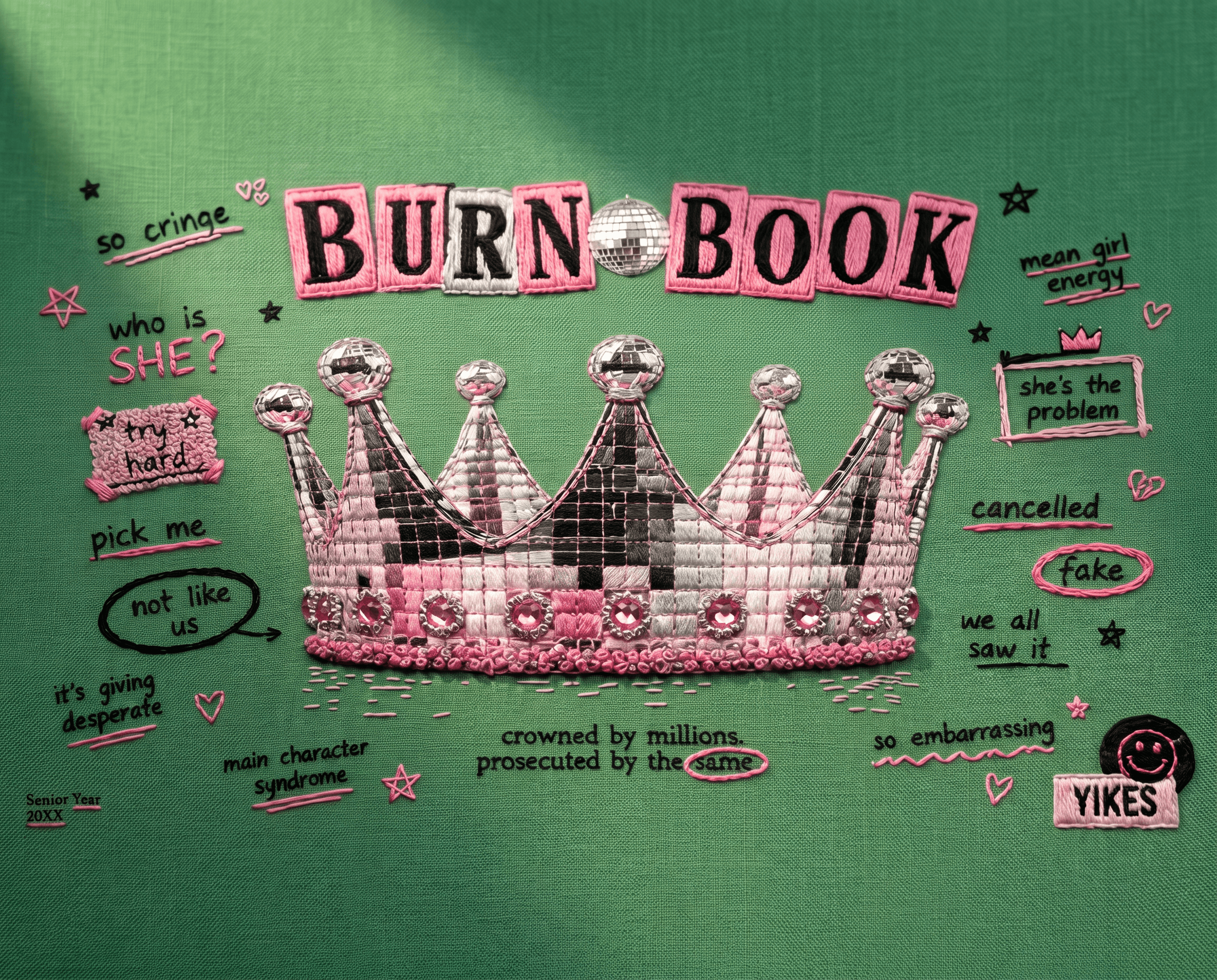
This spring gave us three very different examples of the exact same mechanism: a girl posting her shoes, a reality TV audience collectively socially prosecuting cast members, and a global brand changing its logo into a disco ball.
Annette and the Shoe Trend
A regular accounted @annette reignited a shoe trend this spring using a Beyonce song and a simple concept: showing off her shoe collection.
That’s it.
Not a celebrity scandal. Not rage bait. Not a calculated controversy campaign.
Just a girl sharing something she owns.
And the internet turned her into a viral moment. With a total of 19M Views, 1.2M Likes, 53K comments.
Top Comment Examples:
“They all looked a little bit big, but other than that they were horrible.” 907k likes.
"Annette, please. It's been a long day." 459K likes.
"Ignore the haters. They're right, but ignore them." 97K likes
Other creators joined the trend and the top comment on their posts often are along the lines of: “Take notes Annette.” “You’re a breath of fresh air after Annette.”
The bullying itself became the engine of distribution.
People began repeatedly mentioning her name under completely different creators’ videos. Which created a second algorithmic loop: “Who is Annette?”
Now people who never even saw the original video suddenly became curious enough to search for it.
The audience collectively built discovery infrastructure around her through mockery.
Every repeated mention of her name strengthened algorithmic association. Every joke reinforced relevance. Every comparison pushed more curiosity back toward the original post.
The criticism itself became recommendation fuel.
This was just a regular person posting shoes she owns. However, once virality begins, the individual stops being treated like a person and starts becoming: a meme, a benchmark, a symbol, a cultural reference point.
Beyond the Villa and Digital Public Trials
The biggest trend surrounding Beyond the Villa this spring was not romance.
It was bullying.
Or more specifically: the public fascination with identifying who deserved to be bullied.
The internet became obsessed with deciding who the “mean girl” was, who was fake, who deserved backlash, who was secretly manipulative, who should lose followers, who should be socially punished.
Audiences who previously supported cast members like Hannah and Iris rapidly shifted once “mean girl” narratives gained traction online. Follower counts reportedly dropped (see stats). Entire conversations formed around social favor, reputation damage, and public rejection.
And this pattern has repeated multiple times within the Love Island ecosystem specifically.
The audience collectively identifies: the crazy girl, the toxic girl, the racist, the mean girls, the manipulator, then emotionally rallies around that narrative through reposts, edits, reaction videos, comments, and public discussion.
But what’s fascinating is that the bullied person often becomes the center of the season culturally. Not necessarily the most loved person. The most discussed person.
That’s the same thread we saw with Annette.
The internet emotionally locks onto a target, then collectively builds engagement around them.
People participate through: defending, attacking, psychoanalyzing, mocking, breaking down clips, tracking follower loss, watching interviews, reposting moments.
The audience bonds through collective emotional reaction.
And because the algorithm cannot distinguish between: support, outrage, fascination, or hatred, the person at the center of the bullying often becomes the most amplified.
Spotify and the Disco Ball Logo
Then Spotify temporarily changed its logo into a disco ball.
The internet hated it almost immediately.
People called it ugly. Brands mocked it. Users complained nonstop.
And honestly? I liked the logo.
But emotionally neutral things are often culturally forgettable.
Spotify made something playful enough to irritate people.
And irritation is memorable.
That’s the through line connecting all three of these moments.
Annette. Beyond the Villa. Spotify.
In every case, the emotional reaction became bigger than the original subject.
The internet transformed critique into distribution. Mockery into trend fuel. Public disapproval into visibility.
The Dangerous Incentive
The danger is not that negativity exists online.
It's that being publicly disliked can become more algorithmically valuable than being quietly respected.
Despite how abstract internet culture can feel, behind every meme, pile-on, trend, or “main character of the week,” there is still a person absorbing millions of emotional projections at once.
The algorithm sees engagement.
The human feels humiliation, validation, fame, shame, or all of them simultaneously.
Let's chat again soon...
Gibz
My mission is to
Help you create and earn on your terms.
No spam, unsubscribe anytime.