Mid-Year Check-In


Be the first to know about every new letter.
No spam, unsubscribe anytime.
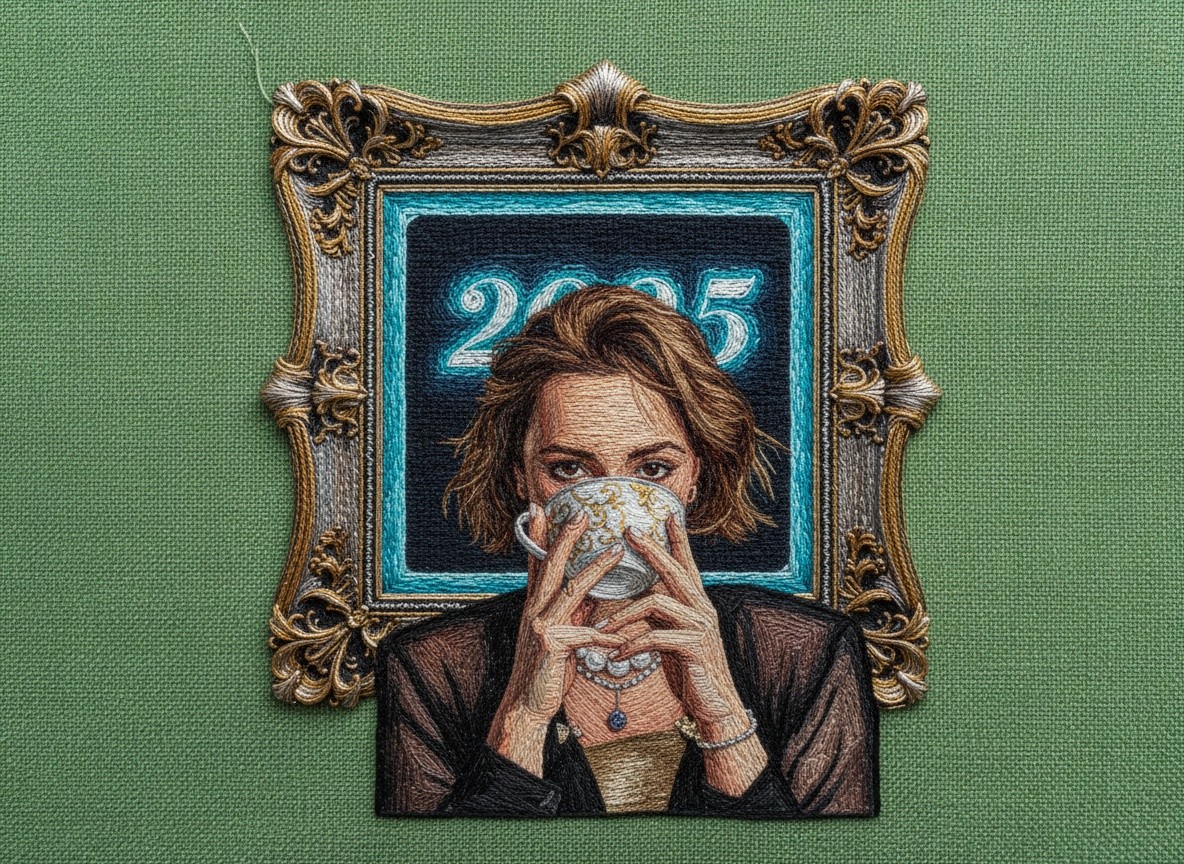
Halfway through 2025, it’s time to see how those year-opening predictions are holding up—and to talk about a new.
Prediction 1 Recap: Imperfection as Proof of Humanity
In January, I said that when perfection became the baseline, flaws would be the proof of life. That’s exactly what we’re seeing.
Social platforms are rewarding raw, unfiltered content—blurry videos, awkward laughs, half-lit selfies—because audiences are starting to distrust anything that looks too perfect.
Influencers are staging “accidental” camera drops and posting unedited takes because polished now reads suspicious. We’ve entered the age where messy is magnetic.
Prediction 2 Recap: The Privacy Wave
The predicted surge in privacy consciousness is here—hard.
Real estate: Major brokerages are testing private listings visible only to select agents before going public, while homeowners blur houses on Google Street View.
Lawmakers: Eight U.S. states have enacted new privacy laws in 2025, giving consumers rights over how their data is collected, shared, and used.
Culture: Anonymity is back in style, not for trend but for safety.
Prediction 3 Recap: AI Agents Changing Industry
We’re watching AI assistants evolve from helpful tools into semi-autonomous operators.
Marketing teams now rely on AI to ideate, script, and even schedule campaigns without human oversight.
Job value is shifting from execution to orchestration—those who know how to delegate to AI win on speed, scale, and cost.
New Prediction: The Ethical Vacuum at the Top ⚠️
The biggest shift I see now isn’t just what AI can do—it’s who decides how it does it.
Here’s the reality: the people left in charge of large AI systems—whether at tech giants, startups, or governments—are becoming de facto ethical gatekeepers for how billions of us will live, work, and interact. And right now, there are low to no checks and balances on that power unless the guardrails are literally coded into the systems themselves.
Why This Matters Now
Centralized control: A handful of decision-makers decide what an AI model will refuse, allow, prioritize, or ignore.
Opaque governance: Even when companies publish “safety updates,” the real decisions are often made behind closed doors by teams with mixed incentives—public trust vs. shareholder growth.
Cultural shaping: AI now writes news summaries, suggests political talking points, designs education materials, and moderates online speech. Those decisions aren’t neutral—they’re values encoded in code.
This isn’t hypothetical—mid-2025 has already shown examples:
OpenAI’s content moderation model controversy over which news sources are prioritized in AI answers.
Stability AI licensing restrictions that decide which industries can use their models—effectively making moral calls on behalf of the market.
Government-aligned AI deployments in Europe and Asia that quietly throttle or promote narratives during election seasons.
Where This is Headed
If left unaddressed, the control of AI ethics will look less like a democracy and more like an unelected monarchy of engineers, executives, and policymakers. And the scariest part? The scale of AI means that one decision—good or bad—can ripple instantly across the entire digital world.
What Needs to Happen
Publicly auditable AI systems where bias checks and decision logs are visible.
Multi-stakeholder oversight boards that include ethicists, technologists, regulators, and everyday users.
Codified guardrails in the systems themselves—not just in company policy—to prevent quiet changes in moral direction.
Bottom Line: At the start of the year, we were talking about how AI would change us. At the midpoint, we need to talk about who gets to decide how AI changes us. Because if we don’t set the standard now, someone else already is—and they’re not asking for permission.
Let's chat again soon...
Gibz
Halfway through 2025, it’s time to see how those year-opening predictions are holding up—and to talk about a new.
Prediction 1 Recap: Imperfection as Proof of Humanity
In January, I said that when perfection became the baseline, flaws would be the proof of life. That’s exactly what we’re seeing.
Social platforms are rewarding raw, unfiltered content—blurry videos, awkward laughs, half-lit selfies—because audiences are starting to distrust anything that looks too perfect.
Influencers are staging “accidental” camera drops and posting unedited takes because polished now reads suspicious. We’ve entered the age where messy is magnetic.
Prediction 2 Recap: The Privacy Wave
The predicted surge in privacy consciousness is here—hard.
Real estate: Major brokerages are testing private listings visible only to select agents before going public, while homeowners blur houses on Google Street View.
Lawmakers: Eight U.S. states have enacted new privacy laws in 2025, giving consumers rights over how their data is collected, shared, and used.
Culture: Anonymity is back in style, not for trend but for safety.
Prediction 3 Recap: AI Agents Changing Industry
We’re watching AI assistants evolve from helpful tools into semi-autonomous operators.
Marketing teams now rely on AI to ideate, script, and even schedule campaigns without human oversight.
Job value is shifting from execution to orchestration—those who know how to delegate to AI win on speed, scale, and cost.
New Prediction: The Ethical Vacuum at the Top ⚠️
The biggest shift I see now isn’t just what AI can do—it’s who decides how it does it.
Here’s the reality: the people left in charge of large AI systems—whether at tech giants, startups, or governments—are becoming de facto ethical gatekeepers for how billions of us will live, work, and interact. And right now, there are low to no checks and balances on that power unless the guardrails are literally coded into the systems themselves.
Why This Matters Now
Centralized control: A handful of decision-makers decide what an AI model will refuse, allow, prioritize, or ignore.
Opaque governance: Even when companies publish “safety updates,” the real decisions are often made behind closed doors by teams with mixed incentives—public trust vs. shareholder growth.
Cultural shaping: AI now writes news summaries, suggests political talking points, designs education materials, and moderates online speech. Those decisions aren’t neutral—they’re values encoded in code.
This isn’t hypothetical—mid-2025 has already shown examples:
OpenAI’s content moderation model controversy over which news sources are prioritized in AI answers.
Stability AI licensing restrictions that decide which industries can use their models—effectively making moral calls on behalf of the market.
Government-aligned AI deployments in Europe and Asia that quietly throttle or promote narratives during election seasons.
Where This is Headed
If left unaddressed, the control of AI ethics will look less like a democracy and more like an unelected monarchy of engineers, executives, and policymakers. And the scariest part? The scale of AI means that one decision—good or bad—can ripple instantly across the entire digital world.
What Needs to Happen
Publicly auditable AI systems where bias checks and decision logs are visible.
Multi-stakeholder oversight boards that include ethicists, technologists, regulators, and everyday users.
Codified guardrails in the systems themselves—not just in company policy—to prevent quiet changes in moral direction.
Bottom Line: At the start of the year, we were talking about how AI would change us. At the midpoint, we need to talk about who gets to decide how AI changes us. Because if we don’t set the standard now, someone else already is—and they’re not asking for permission.
Let's chat again soon...
Gibz
Halfway through 2025, it’s time to see how those year-opening predictions are holding up—and to talk about a new.
Prediction 1 Recap: Imperfection as Proof of Humanity
In January, I said that when perfection became the baseline, flaws would be the proof of life. That’s exactly what we’re seeing.
Social platforms are rewarding raw, unfiltered content—blurry videos, awkward laughs, half-lit selfies—because audiences are starting to distrust anything that looks too perfect.
Influencers are staging “accidental” camera drops and posting unedited takes because polished now reads suspicious. We’ve entered the age where messy is magnetic.
Prediction 2 Recap: The Privacy Wave
The predicted surge in privacy consciousness is here—hard.
Real estate: Major brokerages are testing private listings visible only to select agents before going public, while homeowners blur houses on Google Street View.
Lawmakers: Eight U.S. states have enacted new privacy laws in 2025, giving consumers rights over how their data is collected, shared, and used.
Culture: Anonymity is back in style, not for trend but for safety.
Prediction 3 Recap: AI Agents Changing Industry
We’re watching AI assistants evolve from helpful tools into semi-autonomous operators.
Marketing teams now rely on AI to ideate, script, and even schedule campaigns without human oversight.
Job value is shifting from execution to orchestration—those who know how to delegate to AI win on speed, scale, and cost.
New Prediction: The Ethical Vacuum at the Top ⚠️
The biggest shift I see now isn’t just what AI can do—it’s who decides how it does it.
Here’s the reality: the people left in charge of large AI systems—whether at tech giants, startups, or governments—are becoming de facto ethical gatekeepers for how billions of us will live, work, and interact. And right now, there are low to no checks and balances on that power unless the guardrails are literally coded into the systems themselves.
Why This Matters Now
Centralized control: A handful of decision-makers decide what an AI model will refuse, allow, prioritize, or ignore.
Opaque governance: Even when companies publish “safety updates,” the real decisions are often made behind closed doors by teams with mixed incentives—public trust vs. shareholder growth.
Cultural shaping: AI now writes news summaries, suggests political talking points, designs education materials, and moderates online speech. Those decisions aren’t neutral—they’re values encoded in code.
This isn’t hypothetical—mid-2025 has already shown examples:
OpenAI’s content moderation model controversy over which news sources are prioritized in AI answers.
Stability AI licensing restrictions that decide which industries can use their models—effectively making moral calls on behalf of the market.
Government-aligned AI deployments in Europe and Asia that quietly throttle or promote narratives during election seasons.
Where This is Headed
If left unaddressed, the control of AI ethics will look less like a democracy and more like an unelected monarchy of engineers, executives, and policymakers. And the scariest part? The scale of AI means that one decision—good or bad—can ripple instantly across the entire digital world.
What Needs to Happen
Publicly auditable AI systems where bias checks and decision logs are visible.
Multi-stakeholder oversight boards that include ethicists, technologists, regulators, and everyday users.
Codified guardrails in the systems themselves—not just in company policy—to prevent quiet changes in moral direction.
Bottom Line: At the start of the year, we were talking about how AI would change us. At the midpoint, we need to talk about who gets to decide how AI changes us. Because if we don’t set the standard now, someone else already is—and they’re not asking for permission.
Let's chat again soon...
Gibz
My mission is to
Help you create and earn on your terms.
No spam, unsubscribe anytime.
My mission is to
Help you create and earn on your terms.
No spam, unsubscribe anytime.
My mission is to
Help you create and earn on your terms.
No spam, unsubscribe anytime.