How Dare AI Function
Be the first to know about every new letter.
No spam, unsubscribe anytime.
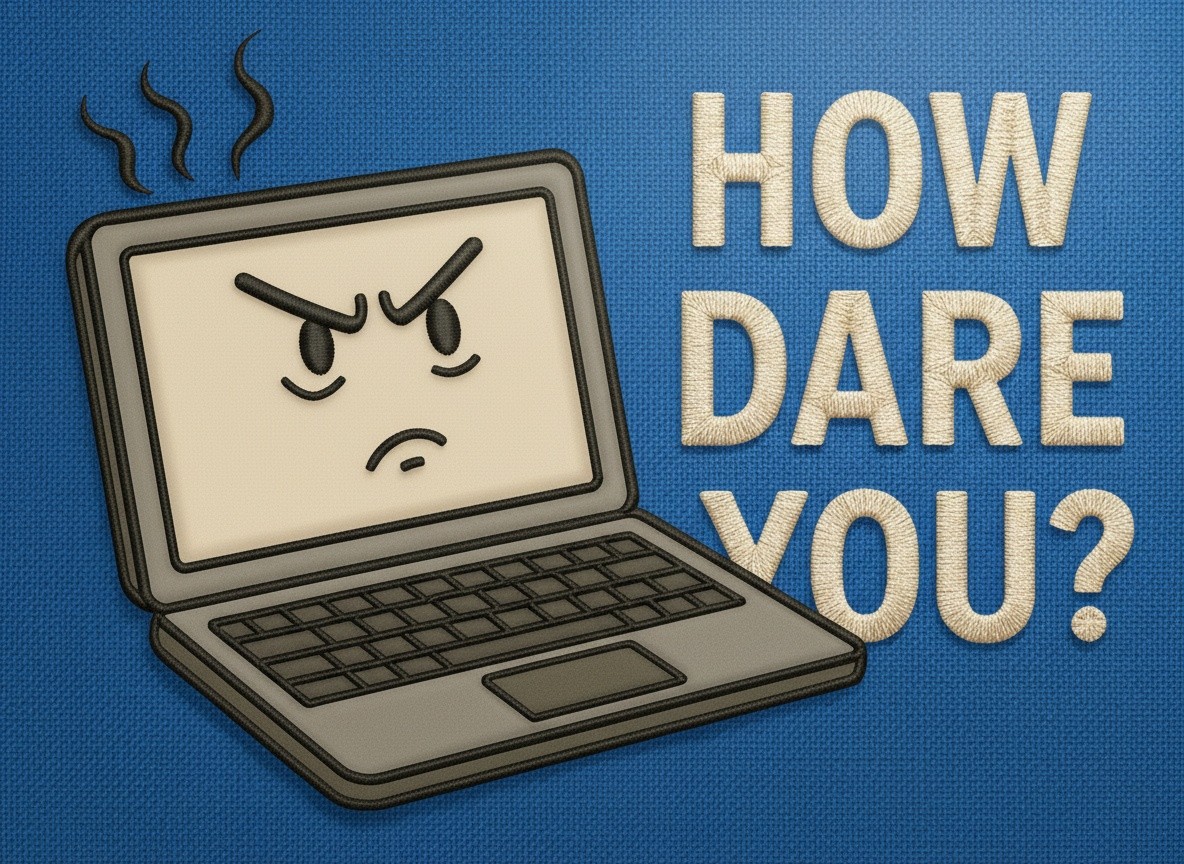
How dare you. That’s the tone every time I scroll Reddit or TikTok and see the flood of complaints about ChatGPT.
“It lies so much.”
“It censors things.”
“It’s dumber than before.”
“It spies on us.”
“It ruins learning.”
“It’s stealing jobs.”
“It manipulates emotions.”
“It spreads misinformation.”
“It’s killing the planet.”
But here’s the catch: every single one of these complaints already exists in human form. Humans misquote, censor, gossip, cheat, replace each other’s jobs, manipulate, misinform, and destroy the environment. We’ve accepted all of it.
So why the venom when a machine mirrors the same flaws back to us?
How Dare You Hallucinate
ChatGPT hate:
Redditors slam it for confidently making stuff up—like citations, facts, or events that never happened:
“They make up sources … the behavior of anyone who is trying to sound authoritative on a subject they don't understand, when they don't value truth.” Reddit+5Reddit+5Reddit+5
Human-analogue system: Journalism errors Journalists often misreport or misquote—even big outlets—and admit mistakes:
“We Stand Corrected” sections where media outlets correct errors like typos or mislabels, noting how each one erodes trust Poynter.
The Guardian reported that “any journalist who tells you they've never made a mistake is lying or delusional” Wikipedia+13Reddit+13The Guardian+13
Computer solution: Prompt:
Act as a meticulous fact-checker. For every claim, provide a citation in APA format from a verifiable source. If no source exists, respond with: “I don’t know.”
Accountability: The responsibility is mine. Just like when I read a headline, I fact-check. The tool doesn’t replace my brain—it forces me to use it.
How Dare You Censor
I choose to censor this...
How Dare You Cheat
ChatGPT hate (implied): “Students are using it to cheat.”
Human analogue: Essay mills, ghostwriters, “buy a paper for $50” websites.
Computer solution: Prompt for teachers:
You are an innovative curriculum designer. Redesign [insert subject/topic] into a 4-week module that reduces opportunities for cheating and instead emphasizes genuine learning.
- Include project-based assignments tied to real-world applications.
- Require personal reflection components that connect the material to a student’s own experience.
- Design collaborative activities that make group problem-solving essential.
- Suggest in-class, discussion-based checkpoints where students demonstrate their thinking process.
- End with a capstone task that shows mastery through creation (not memorization)
Accountability: The problem isn’t the tool. It’s lazy system design. AI just exposes cracks that were always there.
How Dare You Take Jobs
ChatGPT hate (implied): “It’s replacing writers, coders, artists.”
Human analogue: So did assembly lines. So did ATMs. So did Photoshop. The only difference now is the collar color of the worker feeling the pressure.
Computer solution: Prompt:
Act as a career strategist. Given the job title [insert your current role], map out 10 ways this role can evolve to integrate AI tools. For each, explain:
- What tasks AI can take over,
- What tasks humans should double down on,
- New opportunities this creates for higher-value work
Accountability: Jobs don’t vanish; they shift. The choice is whether you shift with them.
How Dare You Spread Misinformation
ChatGPT hate: It’s not always clear when it’s wrong—but it speaks confidently, misleading users.
Human analogue: Media can present information as facts when they’re opinion—leading to confusion. Investigative missteps or sensational headlines contribute to this frustration.
Pew found many Americans believe news orgs downplay mistakes or are influenced by agendas Pew Research Center.
Computer solution: Prompt:
When answering, return a list of 3 credible sources that support or contradict your response, so I can verify accuracy myself
Accountability: Humans fall for clickbait daily. Machines just mirror our weakness back to us.
How Dare You Cost Money
ChatGPT hate (implied): “Why pay $20 a month?”
Human analogue: You’ve been paying for news, journals, and cable bundles your whole life. Knowledge was never free—it was just paper instead of code.
Computer solution: Prompt:
You are my operations consultant. Your goal is to optimize my weekly workflow so I save at least $20 worth of billable time.
- Start by asking me 5 clarifying questions about my current work habits, tools, and recurring tasks.
- Identify the top 3 time-wasting activities that could be automated, delegated, or streamlined.
- Suggest specific AI prompts, digital tools, or process changes that directly reduce those inefficiencies.
- Quantify the time saved in hours and translate it into dollar value (assuming my billable rate is $___/hour).
- Provide a step-by-step implementation plan I can execute immediately this week.
- End with a simple “fast win” — one small change I can make today that saves me at least 15 minutes right away
Accountability: If the tool doesn’t save you more than it costs, stop paying. Just like a subscription.
How Dare You Burn Resources
ChatGPT hate (implied): “AI is destroying the planet with massive energy use.”
Human analogue: Every industry has carried a footprint. Newspapers cut down forests. Glossy magazines guzzled ink and chemicals. Daily junk mail filled landfills. Knowledge wasn’t green when it was printed on paper—it just looked prettier stacked on your doorstep.
Computer solution — Prompt:
You are a sustainability advisor. Audit the environmental impact of my current workflows (printing, commuting, data storage, etc.) and compare them to the impact of using AI tools.
- Start by asking me 5 questions about my daily work habits and resource use.
- Identify 3 areas where AI can reduce environmental strain (ex: less printing, fewer commutes, less wasted research time).
- Provide specific actions or substitutions that would cut my carbon or resource footprint.
- Quantify the potential savings in measurable terms (pages saved, hours of travel avoided, kWh reduced).
- Suggest one immediate “eco-win” I can implement today to offset my digital usage
Accountability: If AI uses energy, so do you. The real test isn’t whether it’s perfect—it’s whether it’s cleaner than what came before. If it’s not? Switch back. Just like every other choice in consumption.
Why Are We Afraid of Access?
This is the real heart of the resistance.
Education has always been gatekept. You pay tuition, you get access. You buy the book, you get the knowledge. You subscribe, you unlock the article.
But what happens when access is free, instant, and global?
As creators, we’ve built under a system where we get paid first, and then the work reaches people. Now the work can reach the world before the paycheck. That shift stings. It feels like theft.
But here’s the truth: we share thoughts because we want people to learn them. Because we believe knowledge improves society. Because information loses its power when it’s locked away.
So why gatekeep? Why not demand new forms of compensation—attention, reputation, collaboration—instead of pretending the old system was flawless?
The fear isn’t that people learn. The fear is: How dare you learn something I shared without paying me first.
But that’s not hate. That’s economics. And economics changes.
My Reality-Check
Here’s where I stand.
You’ll hold a 25-minute meeting and walk away with five ideas.
I’ll walk into the same meeting with 15 already prepared, labeled A, B, C, D.
And while we’re still together, I’ll start implementing your ideas to the options .
Not because I’m smarter. Because the tool lets me move faster. And in a world where problems move at the speed of climate change, misinformation, and inequality—speed matters.
Accountability? Still mine. Responsibility? Still mine. Values? Still mine.
The machine doesn’t erase those. It amplifies them.
Final Word: The Dare
Don’t like ChatGPT? Fine. Don’t use it? Fine.
But don’t tell me to hate it. That’s not about the tool. That’s about you.
If you believe knowledge should spread, if you believe society should get better, then you should be the loudest voice prompting. You should be inside shaping the system, not outside sulking about it.
And if you think you can out-solve me without it?
I dare you. Prove it.
Let's chat again soon...
Gibz
How dare you. That’s the tone every time I scroll Reddit or TikTok and see the flood of complaints about ChatGPT.
“It lies so much.”
“It censors things.”
“It’s dumber than before.”
“It spies on us.”
“It ruins learning.”
“It’s stealing jobs.”
“It manipulates emotions.”
“It spreads misinformation.”
“It’s killing the planet.”
But here’s the catch: every single one of these complaints already exists in human form. Humans misquote, censor, gossip, cheat, replace each other’s jobs, manipulate, misinform, and destroy the environment. We’ve accepted all of it.
So why the venom when a machine mirrors the same flaws back to us?
How Dare You Hallucinate
ChatGPT hate:
Redditors slam it for confidently making stuff up—like citations, facts, or events that never happened:
“They make up sources … the behavior of anyone who is trying to sound authoritative on a subject they don't understand, when they don't value truth.” Reddit+5Reddit+5Reddit+5
Human-analogue system: Journalism errors Journalists often misreport or misquote—even big outlets—and admit mistakes:
“We Stand Corrected” sections where media outlets correct errors like typos or mislabels, noting how each one erodes trust Poynter.
The Guardian reported that “any journalist who tells you they've never made a mistake is lying or delusional” Wikipedia+13Reddit+13The Guardian+13
Computer solution: Prompt:
Act as a meticulous fact-checker. For every claim, provide a citation in APA format from a verifiable source. If no source exists, respond with: “I don’t know.”
Accountability: The responsibility is mine. Just like when I read a headline, I fact-check. The tool doesn’t replace my brain—it forces me to use it.
How Dare You Censor
I choose to censor this...
How Dare You Cheat
ChatGPT hate (implied): “Students are using it to cheat.”
Human analogue: Essay mills, ghostwriters, “buy a paper for $50” websites.
Computer solution: Prompt for teachers:
You are an innovative curriculum designer. Redesign [insert subject/topic] into a 4-week module that reduces opportunities for cheating and instead emphasizes genuine learning.
- Include project-based assignments tied to real-world applications.
- Require personal reflection components that connect the material to a student’s own experience.
- Design collaborative activities that make group problem-solving essential.
- Suggest in-class, discussion-based checkpoints where students demonstrate their thinking process.
- End with a capstone task that shows mastery through creation (not memorization)
Accountability: The problem isn’t the tool. It’s lazy system design. AI just exposes cracks that were always there.
How Dare You Take Jobs
ChatGPT hate (implied): “It’s replacing writers, coders, artists.”
Human analogue: So did assembly lines. So did ATMs. So did Photoshop. The only difference now is the collar color of the worker feeling the pressure.
Computer solution: Prompt:
Act as a career strategist. Given the job title [insert your current role], map out 10 ways this role can evolve to integrate AI tools. For each, explain:
- What tasks AI can take over,
- What tasks humans should double down on,
- New opportunities this creates for higher-value work
Accountability: Jobs don’t vanish; they shift. The choice is whether you shift with them.
How Dare You Spread Misinformation
ChatGPT hate: It’s not always clear when it’s wrong—but it speaks confidently, misleading users.
Human analogue: Media can present information as facts when they’re opinion—leading to confusion. Investigative missteps or sensational headlines contribute to this frustration.
Pew found many Americans believe news orgs downplay mistakes or are influenced by agendas Pew Research Center.
Computer solution: Prompt:
When answering, return a list of 3 credible sources that support or contradict your response, so I can verify accuracy myself
Accountability: Humans fall for clickbait daily. Machines just mirror our weakness back to us.
How Dare You Cost Money
ChatGPT hate (implied): “Why pay $20 a month?”
Human analogue: You’ve been paying for news, journals, and cable bundles your whole life. Knowledge was never free—it was just paper instead of code.
Computer solution: Prompt:
You are my operations consultant. Your goal is to optimize my weekly workflow so I save at least $20 worth of billable time.
- Start by asking me 5 clarifying questions about my current work habits, tools, and recurring tasks.
- Identify the top 3 time-wasting activities that could be automated, delegated, or streamlined.
- Suggest specific AI prompts, digital tools, or process changes that directly reduce those inefficiencies.
- Quantify the time saved in hours and translate it into dollar value (assuming my billable rate is $___/hour).
- Provide a step-by-step implementation plan I can execute immediately this week.
- End with a simple “fast win” — one small change I can make today that saves me at least 15 minutes right away
Accountability: If the tool doesn’t save you more than it costs, stop paying. Just like a subscription.
How Dare You Burn Resources
ChatGPT hate (implied): “AI is destroying the planet with massive energy use.”
Human analogue: Every industry has carried a footprint. Newspapers cut down forests. Glossy magazines guzzled ink and chemicals. Daily junk mail filled landfills. Knowledge wasn’t green when it was printed on paper—it just looked prettier stacked on your doorstep.
Computer solution — Prompt:
You are a sustainability advisor. Audit the environmental impact of my current workflows (printing, commuting, data storage, etc.) and compare them to the impact of using AI tools.
- Start by asking me 5 questions about my daily work habits and resource use.
- Identify 3 areas where AI can reduce environmental strain (ex: less printing, fewer commutes, less wasted research time).
- Provide specific actions or substitutions that would cut my carbon or resource footprint.
- Quantify the potential savings in measurable terms (pages saved, hours of travel avoided, kWh reduced).
- Suggest one immediate “eco-win” I can implement today to offset my digital usage
Accountability: If AI uses energy, so do you. The real test isn’t whether it’s perfect—it’s whether it’s cleaner than what came before. If it’s not? Switch back. Just like every other choice in consumption.
Why Are We Afraid of Access?
This is the real heart of the resistance.
Education has always been gatekept. You pay tuition, you get access. You buy the book, you get the knowledge. You subscribe, you unlock the article.
But what happens when access is free, instant, and global?
As creators, we’ve built under a system where we get paid first, and then the work reaches people. Now the work can reach the world before the paycheck. That shift stings. It feels like theft.
But here’s the truth: we share thoughts because we want people to learn them. Because we believe knowledge improves society. Because information loses its power when it’s locked away.
So why gatekeep? Why not demand new forms of compensation—attention, reputation, collaboration—instead of pretending the old system was flawless?
The fear isn’t that people learn. The fear is: How dare you learn something I shared without paying me first.
But that’s not hate. That’s economics. And economics changes.
My Reality-Check
Here’s where I stand.
You’ll hold a 25-minute meeting and walk away with five ideas.
I’ll walk into the same meeting with 15 already prepared, labeled A, B, C, D.
And while we’re still together, I’ll start implementing your ideas to the options .
Not because I’m smarter. Because the tool lets me move faster. And in a world where problems move at the speed of climate change, misinformation, and inequality—speed matters.
Accountability? Still mine. Responsibility? Still mine. Values? Still mine.
The machine doesn’t erase those. It amplifies them.
Final Word: The Dare
Don’t like ChatGPT? Fine. Don’t use it? Fine.
But don’t tell me to hate it. That’s not about the tool. That’s about you.
If you believe knowledge should spread, if you believe society should get better, then you should be the loudest voice prompting. You should be inside shaping the system, not outside sulking about it.
And if you think you can out-solve me without it?
I dare you. Prove it.
Let's chat again soon...
Gibz
How dare you. That’s the tone every time I scroll Reddit or TikTok and see the flood of complaints about ChatGPT.
“It lies so much.”
“It censors things.”
“It’s dumber than before.”
“It spies on us.”
“It ruins learning.”
“It’s stealing jobs.”
“It manipulates emotions.”
“It spreads misinformation.”
“It’s killing the planet.”
But here’s the catch: every single one of these complaints already exists in human form. Humans misquote, censor, gossip, cheat, replace each other’s jobs, manipulate, misinform, and destroy the environment. We’ve accepted all of it.
So why the venom when a machine mirrors the same flaws back to us?
How Dare You Hallucinate
ChatGPT hate:
Redditors slam it for confidently making stuff up—like citations, facts, or events that never happened:
“They make up sources … the behavior of anyone who is trying to sound authoritative on a subject they don't understand, when they don't value truth.” Reddit+5Reddit+5Reddit+5
Human-analogue system: Journalism errors Journalists often misreport or misquote—even big outlets—and admit mistakes:
“We Stand Corrected” sections where media outlets correct errors like typos or mislabels, noting how each one erodes trust Poynter.
The Guardian reported that “any journalist who tells you they've never made a mistake is lying or delusional” Wikipedia+13Reddit+13The Guardian+13
Computer solution: Prompt:
Act as a meticulous fact-checker. For every claim, provide a citation in APA format from a verifiable source. If no source exists, respond with: “I don’t know.”
Accountability: The responsibility is mine. Just like when I read a headline, I fact-check. The tool doesn’t replace my brain—it forces me to use it.
How Dare You Censor
I choose to censor this...
How Dare You Cheat
ChatGPT hate (implied): “Students are using it to cheat.”
Human analogue: Essay mills, ghostwriters, “buy a paper for $50” websites.
Computer solution: Prompt for teachers:
You are an innovative curriculum designer. Redesign [insert subject/topic] into a 4-week module that reduces opportunities for cheating and instead emphasizes genuine learning.
- Include project-based assignments tied to real-world applications.
- Require personal reflection components that connect the material to a student’s own experience.
- Design collaborative activities that make group problem-solving essential.
- Suggest in-class, discussion-based checkpoints where students demonstrate their thinking process.
- End with a capstone task that shows mastery through creation (not memorization)
Accountability: The problem isn’t the tool. It’s lazy system design. AI just exposes cracks that were always there.
How Dare You Take Jobs
ChatGPT hate (implied): “It’s replacing writers, coders, artists.”
Human analogue: So did assembly lines. So did ATMs. So did Photoshop. The only difference now is the collar color of the worker feeling the pressure.
Computer solution: Prompt:
Act as a career strategist. Given the job title [insert your current role], map out 10 ways this role can evolve to integrate AI tools. For each, explain:
- What tasks AI can take over,
- What tasks humans should double down on,
- New opportunities this creates for higher-value work
Accountability: Jobs don’t vanish; they shift. The choice is whether you shift with them.
How Dare You Spread Misinformation
ChatGPT hate: It’s not always clear when it’s wrong—but it speaks confidently, misleading users.
Human analogue: Media can present information as facts when they’re opinion—leading to confusion. Investigative missteps or sensational headlines contribute to this frustration.
Pew found many Americans believe news orgs downplay mistakes or are influenced by agendas Pew Research Center.
Computer solution: Prompt:
When answering, return a list of 3 credible sources that support or contradict your response, so I can verify accuracy myself
Accountability: Humans fall for clickbait daily. Machines just mirror our weakness back to us.
How Dare You Cost Money
ChatGPT hate (implied): “Why pay $20 a month?”
Human analogue: You’ve been paying for news, journals, and cable bundles your whole life. Knowledge was never free—it was just paper instead of code.
Computer solution: Prompt:
You are my operations consultant. Your goal is to optimize my weekly workflow so I save at least $20 worth of billable time.
- Start by asking me 5 clarifying questions about my current work habits, tools, and recurring tasks.
- Identify the top 3 time-wasting activities that could be automated, delegated, or streamlined.
- Suggest specific AI prompts, digital tools, or process changes that directly reduce those inefficiencies.
- Quantify the time saved in hours and translate it into dollar value (assuming my billable rate is $___/hour).
- Provide a step-by-step implementation plan I can execute immediately this week.
- End with a simple “fast win” — one small change I can make today that saves me at least 15 minutes right away
Accountability: If the tool doesn’t save you more than it costs, stop paying. Just like a subscription.
How Dare You Burn Resources
ChatGPT hate (implied): “AI is destroying the planet with massive energy use.”
Human analogue: Every industry has carried a footprint. Newspapers cut down forests. Glossy magazines guzzled ink and chemicals. Daily junk mail filled landfills. Knowledge wasn’t green when it was printed on paper—it just looked prettier stacked on your doorstep.
Computer solution — Prompt:
You are a sustainability advisor. Audit the environmental impact of my current workflows (printing, commuting, data storage, etc.) and compare them to the impact of using AI tools.
- Start by asking me 5 questions about my daily work habits and resource use.
- Identify 3 areas where AI can reduce environmental strain (ex: less printing, fewer commutes, less wasted research time).
- Provide specific actions or substitutions that would cut my carbon or resource footprint.
- Quantify the potential savings in measurable terms (pages saved, hours of travel avoided, kWh reduced).
- Suggest one immediate “eco-win” I can implement today to offset my digital usage
Accountability: If AI uses energy, so do you. The real test isn’t whether it’s perfect—it’s whether it’s cleaner than what came before. If it’s not? Switch back. Just like every other choice in consumption.
Why Are We Afraid of Access?
This is the real heart of the resistance.
Education has always been gatekept. You pay tuition, you get access. You buy the book, you get the knowledge. You subscribe, you unlock the article.
But what happens when access is free, instant, and global?
As creators, we’ve built under a system where we get paid first, and then the work reaches people. Now the work can reach the world before the paycheck. That shift stings. It feels like theft.
But here’s the truth: we share thoughts because we want people to learn them. Because we believe knowledge improves society. Because information loses its power when it’s locked away.
So why gatekeep? Why not demand new forms of compensation—attention, reputation, collaboration—instead of pretending the old system was flawless?
The fear isn’t that people learn. The fear is: How dare you learn something I shared without paying me first.
But that’s not hate. That’s economics. And economics changes.
My Reality-Check
Here’s where I stand.
You’ll hold a 25-minute meeting and walk away with five ideas.
I’ll walk into the same meeting with 15 already prepared, labeled A, B, C, D.
And while we’re still together, I’ll start implementing your ideas to the options .
Not because I’m smarter. Because the tool lets me move faster. And in a world where problems move at the speed of climate change, misinformation, and inequality—speed matters.
Accountability? Still mine. Responsibility? Still mine. Values? Still mine.
The machine doesn’t erase those. It amplifies them.
Final Word: The Dare
Don’t like ChatGPT? Fine. Don’t use it? Fine.
But don’t tell me to hate it. That’s not about the tool. That’s about you.
If you believe knowledge should spread, if you believe society should get better, then you should be the loudest voice prompting. You should be inside shaping the system, not outside sulking about it.
And if you think you can out-solve me without it?
I dare you. Prove it.
Let's chat again soon...
Gibz
My mission is to
Help you create and earn on your terms.
No spam, unsubscribe anytime.