Jake Paul Sora AI


Be the first to know about every new letter.
No spam, unsubscribe anytime.
Jake Paul seen doing… what exactly.
That headline alone used to be enough to start a fire. Growing up, Jake Paul lived under a digital microscope — the kind of media storm where if there was a video of him doing something wild, it was fact. He burned a mattress in his pool? You saw the footage. The clip existed. Therefore, it was true.
But now? That assumption is gone.
Because today, I can make Jake Paul do anything.
And if you’ve ever posted a picture of yourself online, I can make you do anything, too.
We’ve entered a new era where the system of fact and fiction has collapsed — not because truth disappeared, but because anyone can produce it.
Jake Paul Arrested - Make it Feel Real
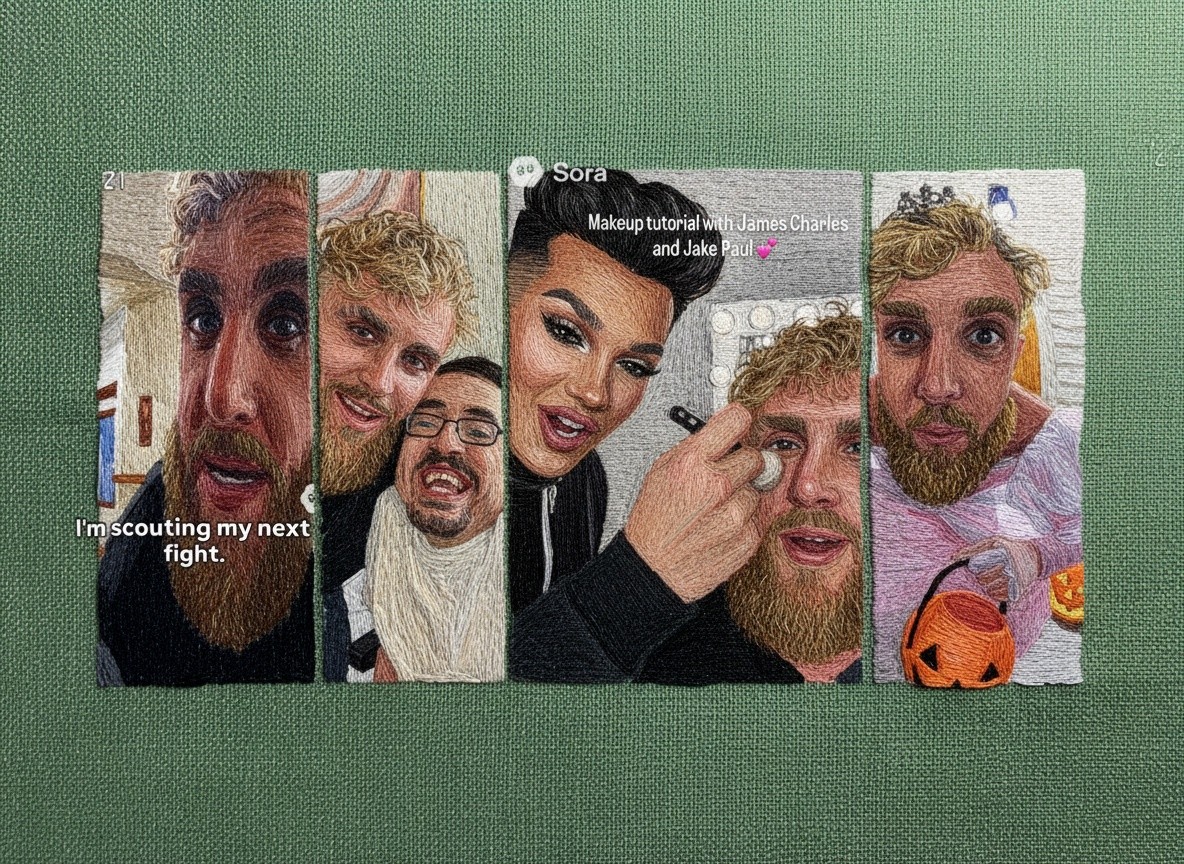
A shaky, body-cam-style video shows Jake Paul being detained in the hallway of a nursing home, the officer’s breathing loud in the mic, fluorescent lights flickering overhead. The caption says he was “looking for a retired Navy boxer.” It fits his persona perfectly the brash businessman chasing a viral storyline, half-hero, half-hustler. And that’s why it works. It’s believable because it’s on-brand.
This is how synthetic media earns our trust: it doesn’t invent new realities, it hijacks existing expectations. The fake arrest scene borrows every cue of authenticity, handheld footage, uniformed authority, an oddly specific motive, to convince viewers it must be real. The danger here isn’t only reputational; it’s behavioral conditioning. Once people see something that “feels” true, they act on it. They comment, they cancel, they call the office. A clip like this wouldn’t just trend; it would tilt public memory.
Jake Paul’s Boyfriend - Weaponization of Longing
A fan’s fantasy becomes a film: clips of Jake Paul stitched together with romantic gestures, borrowed laughter, and AI-generated intimacy. In the video, they’re kissing, confessing love, even getting married. All crafted from public moments and reassembled into private delusion. The lighting feels familiar, the body language authentic, the emotion believable. It doesn’t look like obsession. It looks like affection.
Where hate once distorted reputation, love now does the same. Synthetic affection creates emotional truth without factual basis, tricking algorithms, fans, and even Jake himself into participating in a narrative that never happened. It’s parasocial possession dressed as romance.
And it’s powerful because it flatters. A fake scandal invites defense; a fake love story invites belief. In this new media economy, adoration becomes a form of control. Someone else’s fantasy writes your storyline, and the internet rewards it for feeling sincere.
Jake Paul Trick or Treating - Doorbell Cam “Witness”
Manufacture a clip that looks like it was caught on your doorbell camera. An intimate, homey angle people instinctively trust and stage an adult in childlike dress to perform bizarre, attention-grabbing behavior. The effect is immediate: viewers assume the footage is real, local, and verifiable because of the camera framing. That combination: familiar camera perspective + staged intimacy weaponizes our basic trust cues. Turning neighborhood feeds into proof channels that are devastatingly persuasive.
Jake Paul Doing Makeup - Featuring Real People
A glossy, high-production clip of Jake in a vanity mirror, hand steady as he follows a James Charles-style tutorial, lands like cinematic proof: familiar lighting, a known beauty voiceover, the branded palette in frame. Because it borrows the choreography and visual cues of the beauty world, it reads as plausible. Two recognizable personalities in a staged, intimate moment. The danger isn’t the makeup; it’s that the format borrows trust from a community that already accepts these staged performances as truth.
Jake Paul Fan Art - Digital Replication as Worship
Each user becomes a volunteer in the PR machine, reproducing a persona they helped invent. AI lowers the cost of belief: no film crew, no budget, no consent. Just infinite access to the image. The more they fabricate, the more real he becomes.
And that’s the paradox. The fakes aren’t destroying his brand they’re scaling it.
The line between audience and architect has vanished; the myth now markets itself. Jake Paul doesn’t need to post anymore his believers post him into existence.
The Reflection We Can’t Ignore
If Sora can make Jake Paul do anything, it can make us all do something.
The question isn’t “Is it real?” anymore it’s “Who controls the story?”
We’ve reached a point where we need new instincts for digital discernment.
The modern literacy test isn’t reading or writing it’s recognition.
Because the next time you hear,
“Did you see the video of Jake Paul doing…?”
the only correct answer might be,
“Which version?”
Let’s chat again soon…
Gibz
Jake Paul seen doing… what exactly.
That headline alone used to be enough to start a fire. Growing up, Jake Paul lived under a digital microscope — the kind of media storm where if there was a video of him doing something wild, it was fact. He burned a mattress in his pool? You saw the footage. The clip existed. Therefore, it was true.
But now? That assumption is gone.
Because today, I can make Jake Paul do anything.
And if you’ve ever posted a picture of yourself online, I can make you do anything, too.
We’ve entered a new era where the system of fact and fiction has collapsed — not because truth disappeared, but because anyone can produce it.
Jake Paul Arrested - Make it Feel Real
A shaky, body-cam-style video shows Jake Paul being detained in the hallway of a nursing home, the officer’s breathing loud in the mic, fluorescent lights flickering overhead. The caption says he was “looking for a retired Navy boxer.” It fits his persona perfectly the brash businessman chasing a viral storyline, half-hero, half-hustler. And that’s why it works. It’s believable because it’s on-brand.
This is how synthetic media earns our trust: it doesn’t invent new realities, it hijacks existing expectations. The fake arrest scene borrows every cue of authenticity, handheld footage, uniformed authority, an oddly specific motive, to convince viewers it must be real. The danger here isn’t only reputational; it’s behavioral conditioning. Once people see something that “feels” true, they act on it. They comment, they cancel, they call the office. A clip like this wouldn’t just trend; it would tilt public memory.
Jake Paul’s Boyfriend - Weaponization of Longing
A fan’s fantasy becomes a film: clips of Jake Paul stitched together with romantic gestures, borrowed laughter, and AI-generated intimacy. In the video, they’re kissing, confessing love, even getting married. All crafted from public moments and reassembled into private delusion. The lighting feels familiar, the body language authentic, the emotion believable. It doesn’t look like obsession. It looks like affection.
Where hate once distorted reputation, love now does the same. Synthetic affection creates emotional truth without factual basis, tricking algorithms, fans, and even Jake himself into participating in a narrative that never happened. It’s parasocial possession dressed as romance.
And it’s powerful because it flatters. A fake scandal invites defense; a fake love story invites belief. In this new media economy, adoration becomes a form of control. Someone else’s fantasy writes your storyline, and the internet rewards it for feeling sincere.
Jake Paul Trick or Treating - Doorbell Cam “Witness”
Manufacture a clip that looks like it was caught on your doorbell camera. An intimate, homey angle people instinctively trust and stage an adult in childlike dress to perform bizarre, attention-grabbing behavior. The effect is immediate: viewers assume the footage is real, local, and verifiable because of the camera framing. That combination: familiar camera perspective + staged intimacy weaponizes our basic trust cues. Turning neighborhood feeds into proof channels that are devastatingly persuasive.
Jake Paul Doing Makeup - Featuring Real People
A glossy, high-production clip of Jake in a vanity mirror, hand steady as he follows a James Charles-style tutorial, lands like cinematic proof: familiar lighting, a known beauty voiceover, the branded palette in frame. Because it borrows the choreography and visual cues of the beauty world, it reads as plausible. Two recognizable personalities in a staged, intimate moment. The danger isn’t the makeup; it’s that the format borrows trust from a community that already accepts these staged performances as truth.
Jake Paul Fan Art - Digital Replication as Worship
Each user becomes a volunteer in the PR machine, reproducing a persona they helped invent. AI lowers the cost of belief: no film crew, no budget, no consent. Just infinite access to the image. The more they fabricate, the more real he becomes.
And that’s the paradox. The fakes aren’t destroying his brand they’re scaling it.
The line between audience and architect has vanished; the myth now markets itself. Jake Paul doesn’t need to post anymore his believers post him into existence.
The Reflection We Can’t Ignore
If Sora can make Jake Paul do anything, it can make us all do something.
The question isn’t “Is it real?” anymore it’s “Who controls the story?”
We’ve reached a point where we need new instincts for digital discernment.
The modern literacy test isn’t reading or writing it’s recognition.
Because the next time you hear,
“Did you see the video of Jake Paul doing…?”
the only correct answer might be,
“Which version?”
Let’s chat again soon…
Gibz
Jake Paul seen doing… what exactly.
That headline alone used to be enough to start a fire. Growing up, Jake Paul lived under a digital microscope — the kind of media storm where if there was a video of him doing something wild, it was fact. He burned a mattress in his pool? You saw the footage. The clip existed. Therefore, it was true.
But now? That assumption is gone.
Because today, I can make Jake Paul do anything.
And if you’ve ever posted a picture of yourself online, I can make you do anything, too.
We’ve entered a new era where the system of fact and fiction has collapsed — not because truth disappeared, but because anyone can produce it.
Jake Paul Arrested - Make it Feel Real
A shaky, body-cam-style video shows Jake Paul being detained in the hallway of a nursing home, the officer’s breathing loud in the mic, fluorescent lights flickering overhead. The caption says he was “looking for a retired Navy boxer.” It fits his persona perfectly the brash businessman chasing a viral storyline, half-hero, half-hustler. And that’s why it works. It’s believable because it’s on-brand.
This is how synthetic media earns our trust: it doesn’t invent new realities, it hijacks existing expectations. The fake arrest scene borrows every cue of authenticity, handheld footage, uniformed authority, an oddly specific motive, to convince viewers it must be real. The danger here isn’t only reputational; it’s behavioral conditioning. Once people see something that “feels” true, they act on it. They comment, they cancel, they call the office. A clip like this wouldn’t just trend; it would tilt public memory.
Jake Paul’s Boyfriend - Weaponization of Longing
A fan’s fantasy becomes a film: clips of Jake Paul stitched together with romantic gestures, borrowed laughter, and AI-generated intimacy. In the video, they’re kissing, confessing love, even getting married. All crafted from public moments and reassembled into private delusion. The lighting feels familiar, the body language authentic, the emotion believable. It doesn’t look like obsession. It looks like affection.
Where hate once distorted reputation, love now does the same. Synthetic affection creates emotional truth without factual basis, tricking algorithms, fans, and even Jake himself into participating in a narrative that never happened. It’s parasocial possession dressed as romance.
And it’s powerful because it flatters. A fake scandal invites defense; a fake love story invites belief. In this new media economy, adoration becomes a form of control. Someone else’s fantasy writes your storyline, and the internet rewards it for feeling sincere.
Jake Paul Trick or Treating - Doorbell Cam “Witness”
Manufacture a clip that looks like it was caught on your doorbell camera. An intimate, homey angle people instinctively trust and stage an adult in childlike dress to perform bizarre, attention-grabbing behavior. The effect is immediate: viewers assume the footage is real, local, and verifiable because of the camera framing. That combination: familiar camera perspective + staged intimacy weaponizes our basic trust cues. Turning neighborhood feeds into proof channels that are devastatingly persuasive.
Jake Paul Doing Makeup - Featuring Real People
A glossy, high-production clip of Jake in a vanity mirror, hand steady as he follows a James Charles-style tutorial, lands like cinematic proof: familiar lighting, a known beauty voiceover, the branded palette in frame. Because it borrows the choreography and visual cues of the beauty world, it reads as plausible. Two recognizable personalities in a staged, intimate moment. The danger isn’t the makeup; it’s that the format borrows trust from a community that already accepts these staged performances as truth.
Jake Paul Fan Art - Digital Replication as Worship
Each user becomes a volunteer in the PR machine, reproducing a persona they helped invent. AI lowers the cost of belief: no film crew, no budget, no consent. Just infinite access to the image. The more they fabricate, the more real he becomes.
And that’s the paradox. The fakes aren’t destroying his brand they’re scaling it.
The line between audience and architect has vanished; the myth now markets itself. Jake Paul doesn’t need to post anymore his believers post him into existence.
The Reflection We Can’t Ignore
If Sora can make Jake Paul do anything, it can make us all do something.
The question isn’t “Is it real?” anymore it’s “Who controls the story?”
We’ve reached a point where we need new instincts for digital discernment.
The modern literacy test isn’t reading or writing it’s recognition.
Because the next time you hear,
“Did you see the video of Jake Paul doing…?”
the only correct answer might be,
“Which version?”
Let’s chat again soon…
Gibz
My mission is to
Help you create and earn on your terms.
No spam, unsubscribe anytime.
My mission is to
Help you create and earn on your terms.
No spam, unsubscribe anytime.
My mission is to
Help you create and earn on your terms.
No spam, unsubscribe anytime.