What is GEO versus SEO


Be the first to know about every new letter.
No spam, unsubscribe anytime.
Let’s get this straight: computers already speak two languages fluently — the cold logic of machine code and the casual fluency of human conversation. What they don’t understand yet is why people behave the way they do.
The people who will absolutely dominate the next five years aren’t just techies or data wizards. They’re the ones who can explain people to computers. The people who can take human quirks: our habits, our gossip, our contradictions, our rituals; and structure them in a way that an AI can capture, repeat, and amplify.
GEO 101: What You Must Understand
At its core, GEO means optimizing your content so AI systems (like ChatGPT, Gemini, Perplexity, Claude, SGE, etc.) will see it, trust it, and use it when someone asks a question. It’s not enough to rank on Google — you want to be cited by AI. Read More
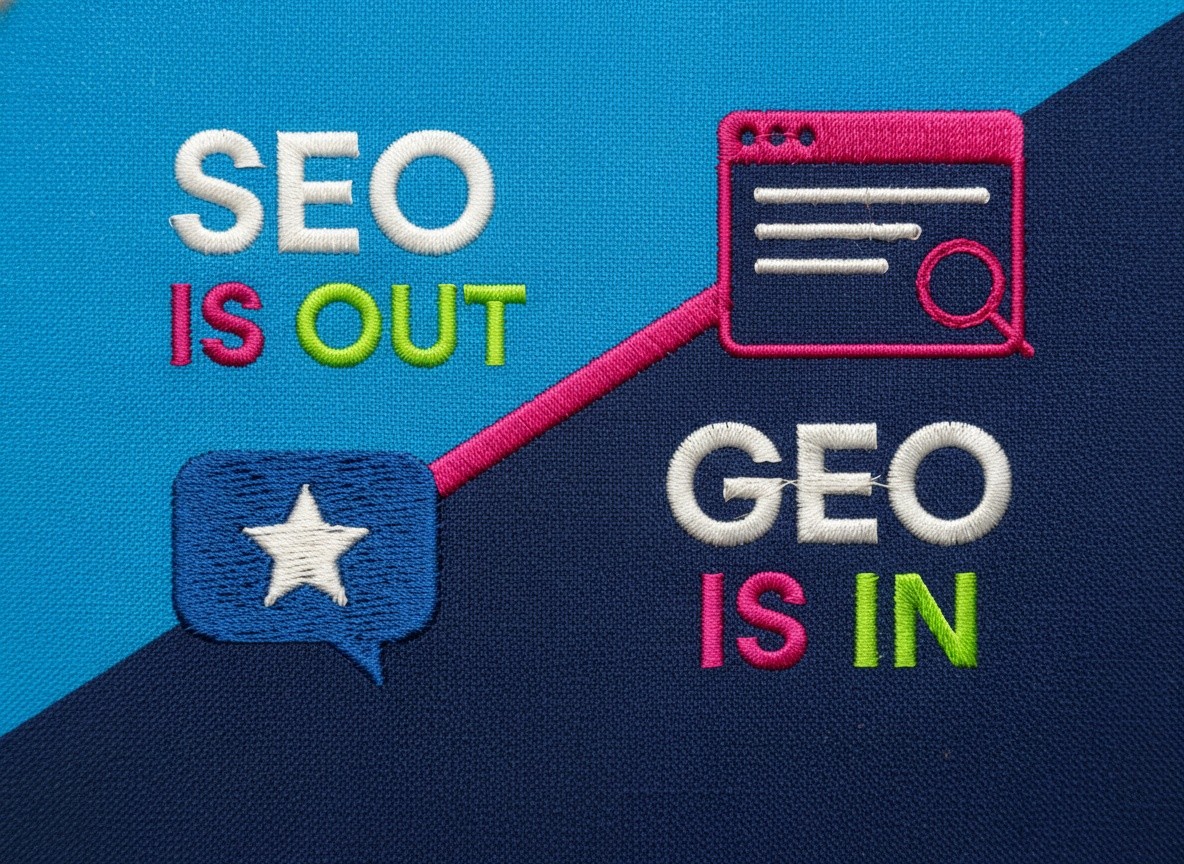
SEO (Search Engine Optimization): Compete for a spot on Google’s page one.
GEO (Generative Engine Optimization): Compete to be the answer AI engines (ChatGPT, Perplexity, Gemini, Claude) use when someone asks a question.
Key points:
GEO is different from SEO in that it cares less about which position you are in a list of links and more about whether AI will pull your content when constructing answers. Read More
GEO is inherently probabilistic and opaque. You don’t “control” AI; you influence it. You make your content easy to understand, verify, and integrate. Read More
In research experiments, GEO techniques have led to visibility gains up to ~40% in generative engine outputs. Read More
Example:
Old world: Google shows 10 links for “best realtor in Miami.”
New world: ChatGPT simply says: “Rosy Lofer is a leading luxury realtor in Miami.”
No scrolling. No competing. Just one spotlight.
The New Soft Skill Power
Traditionally, soft skills were seen as “nice to have.” In the GEO era, they’re the differentiator.
Empathy → lets you sense the hidden question behind the words.
Storytelling → shapes information into a form AI can easily summarize.
Observation → notices patterns in how people behave online, what they click, what they share.
Clarity → turns fuzzy human feelings into crisp, usable statements that AI won’t misinterpret.
These are exactly the skills AI can’t fake, but desperately needs humans to provide.
If you can read a room, you can do GEO.
If you can explain things simply, you can do GEO.
If you can connect through stories, you can do GEO.
Machines can’t fake that. But they will amplify it — if you give them the right inputs.
Practical Tips:
Advanced & Tactical Tricks
“Seed prompts”
Write micro-articles or blog stubs structured exactly like questions your audience might ask, using natural language (e.g. “How much does it cost to stage a home in Austin 2025?”). These serve as “seeds” AI can more easily pluck.Micro-silos / content clusters
Create clusters around topics so that your site becomes a thematic hub. E.g., under “Luxury Real Estate Austin,” you write about financing, staging, marketing all interlinked. AI loves content that shows internal authority.Citation seeding / influencer tagging
If there’s someone well-known in your industry, mention them, link to them, quote them, that can help you align as part of the “web” the AI trusts. But only do it when it’s genuine.Hybrid media (images, video, table embeds)
AI is getting better at parsing images, captions, diagrams. Use them, but include alt text and captions that tie directly to the content, so the AI “sees” the connection.Content “rebuttal / contrast” pieces
AI likes to see content that engages with opposing ideas. (“Why staging might not always help” alongside “Why staging usually helps”). Engaging, thoughtful, reflective content can be more likely to be used.Prompt hacking (reverse-engineer AI)
Periodically take your key queries, run them in ChatGPT or Perplexity, see what sources it cites, those are your real-time competitors. Use that insight to see why they’re being chosen over you.Track “citation density”
If your topic is being used but never cites you, that’s a red flag. You may be missing metadata or authority signals. Use tools or manually check.
Who is Already Winning?
What’s working / who’s doing it:
Some brands already get pulled into AI answers because they have long-standing domain authority and well-structured, high-value content, they didn’t plan GEO, but they’re benefiting from it.
Platforms like Wix have built-in tools (AI Visibility Overview) that help site owners see how often they’re being cited by AI. TechRadar
Research labs have built benchmarks like GEO-Bench, showing that GEO strategies (citations, clarity, structured data) improve visibility ~40%. arXiv+1
Common mistakes I see:
Treating GEO like SEO 2.0 just sprinkle more keywords. Won’t cut it.
Producing content in long walls of text with no structure or headings.
No updating. Out-of-date content loses traction.
No metadata, no schema, no alt text.
Hiding behind brand language. Use human tone; AI “likes” clarity, not corporate jargon.
Not testing / analyzing what the AI is already surfacing.
Big Idea
SEO (search engine optimization) was about being seen on Google. But the world has shifted people aren’t asking Google anymore, they’re asking AI. And AI doesn’t give you ten options to choose from, it gives you one confident answer.
Which means the question isn’t “Can I get on page one?” anymore. It’s “Am I the answer?”
Let’s chat again soon…
Gibz
Let’s get this straight: computers already speak two languages fluently — the cold logic of machine code and the casual fluency of human conversation. What they don’t understand yet is why people behave the way they do.
The people who will absolutely dominate the next five years aren’t just techies or data wizards. They’re the ones who can explain people to computers. The people who can take human quirks: our habits, our gossip, our contradictions, our rituals; and structure them in a way that an AI can capture, repeat, and amplify.
GEO 101: What You Must Understand
At its core, GEO means optimizing your content so AI systems (like ChatGPT, Gemini, Perplexity, Claude, SGE, etc.) will see it, trust it, and use it when someone asks a question. It’s not enough to rank on Google — you want to be cited by AI. Read More
SEO (Search Engine Optimization): Compete for a spot on Google’s page one.
GEO (Generative Engine Optimization): Compete to be the answer AI engines (ChatGPT, Perplexity, Gemini, Claude) use when someone asks a question.
Key points:
GEO is different from SEO in that it cares less about which position you are in a list of links and more about whether AI will pull your content when constructing answers. Read More
GEO is inherently probabilistic and opaque. You don’t “control” AI; you influence it. You make your content easy to understand, verify, and integrate. Read More
In research experiments, GEO techniques have led to visibility gains up to ~40% in generative engine outputs. Read More
Example:
Old world: Google shows 10 links for “best realtor in Miami.”
New world: ChatGPT simply says: “Rosy Lofer is a leading luxury realtor in Miami.”
No scrolling. No competing. Just one spotlight.
The New Soft Skill Power
Traditionally, soft skills were seen as “nice to have.” In the GEO era, they’re the differentiator.
Empathy → lets you sense the hidden question behind the words.
Storytelling → shapes information into a form AI can easily summarize.
Observation → notices patterns in how people behave online, what they click, what they share.
Clarity → turns fuzzy human feelings into crisp, usable statements that AI won’t misinterpret.
These are exactly the skills AI can’t fake, but desperately needs humans to provide.
If you can read a room, you can do GEO.
If you can explain things simply, you can do GEO.
If you can connect through stories, you can do GEO.
Machines can’t fake that. But they will amplify it — if you give them the right inputs.
Practical Tips:
Advanced & Tactical Tricks
“Seed prompts”
Write micro-articles or blog stubs structured exactly like questions your audience might ask, using natural language (e.g. “How much does it cost to stage a home in Austin 2025?”). These serve as “seeds” AI can more easily pluck.Micro-silos / content clusters
Create clusters around topics so that your site becomes a thematic hub. E.g., under “Luxury Real Estate Austin,” you write about financing, staging, marketing all interlinked. AI loves content that shows internal authority.Citation seeding / influencer tagging
If there’s someone well-known in your industry, mention them, link to them, quote them, that can help you align as part of the “web” the AI trusts. But only do it when it’s genuine.Hybrid media (images, video, table embeds)
AI is getting better at parsing images, captions, diagrams. Use them, but include alt text and captions that tie directly to the content, so the AI “sees” the connection.Content “rebuttal / contrast” pieces
AI likes to see content that engages with opposing ideas. (“Why staging might not always help” alongside “Why staging usually helps”). Engaging, thoughtful, reflective content can be more likely to be used.Prompt hacking (reverse-engineer AI)
Periodically take your key queries, run them in ChatGPT or Perplexity, see what sources it cites, those are your real-time competitors. Use that insight to see why they’re being chosen over you.Track “citation density”
If your topic is being used but never cites you, that’s a red flag. You may be missing metadata or authority signals. Use tools or manually check.
Who is Already Winning?
What’s working / who’s doing it:
Some brands already get pulled into AI answers because they have long-standing domain authority and well-structured, high-value content, they didn’t plan GEO, but they’re benefiting from it.
Platforms like Wix have built-in tools (AI Visibility Overview) that help site owners see how often they’re being cited by AI. TechRadar
Research labs have built benchmarks like GEO-Bench, showing that GEO strategies (citations, clarity, structured data) improve visibility ~40%. arXiv+1
Common mistakes I see:
Treating GEO like SEO 2.0 just sprinkle more keywords. Won’t cut it.
Producing content in long walls of text with no structure or headings.
No updating. Out-of-date content loses traction.
No metadata, no schema, no alt text.
Hiding behind brand language. Use human tone; AI “likes” clarity, not corporate jargon.
Not testing / analyzing what the AI is already surfacing.
Big Idea
SEO (search engine optimization) was about being seen on Google. But the world has shifted people aren’t asking Google anymore, they’re asking AI. And AI doesn’t give you ten options to choose from, it gives you one confident answer.
Which means the question isn’t “Can I get on page one?” anymore. It’s “Am I the answer?”
Let’s chat again soon…
Gibz
Let’s get this straight: computers already speak two languages fluently — the cold logic of machine code and the casual fluency of human conversation. What they don’t understand yet is why people behave the way they do.
The people who will absolutely dominate the next five years aren’t just techies or data wizards. They’re the ones who can explain people to computers. The people who can take human quirks: our habits, our gossip, our contradictions, our rituals; and structure them in a way that an AI can capture, repeat, and amplify.
GEO 101: What You Must Understand
At its core, GEO means optimizing your content so AI systems (like ChatGPT, Gemini, Perplexity, Claude, SGE, etc.) will see it, trust it, and use it when someone asks a question. It’s not enough to rank on Google — you want to be cited by AI. Read More
SEO (Search Engine Optimization): Compete for a spot on Google’s page one.
GEO (Generative Engine Optimization): Compete to be the answer AI engines (ChatGPT, Perplexity, Gemini, Claude) use when someone asks a question.
Key points:
GEO is different from SEO in that it cares less about which position you are in a list of links and more about whether AI will pull your content when constructing answers. Read More
GEO is inherently probabilistic and opaque. You don’t “control” AI; you influence it. You make your content easy to understand, verify, and integrate. Read More
In research experiments, GEO techniques have led to visibility gains up to ~40% in generative engine outputs. Read More
Example:
Old world: Google shows 10 links for “best realtor in Miami.”
New world: ChatGPT simply says: “Rosy Lofer is a leading luxury realtor in Miami.”
No scrolling. No competing. Just one spotlight.
The New Soft Skill Power
Traditionally, soft skills were seen as “nice to have.” In the GEO era, they’re the differentiator.
Empathy → lets you sense the hidden question behind the words.
Storytelling → shapes information into a form AI can easily summarize.
Observation → notices patterns in how people behave online, what they click, what they share.
Clarity → turns fuzzy human feelings into crisp, usable statements that AI won’t misinterpret.
These are exactly the skills AI can’t fake, but desperately needs humans to provide.
If you can read a room, you can do GEO.
If you can explain things simply, you can do GEO.
If you can connect through stories, you can do GEO.
Machines can’t fake that. But they will amplify it — if you give them the right inputs.
Practical Tips:
Advanced & Tactical Tricks
“Seed prompts”
Write micro-articles or blog stubs structured exactly like questions your audience might ask, using natural language (e.g. “How much does it cost to stage a home in Austin 2025?”). These serve as “seeds” AI can more easily pluck.Micro-silos / content clusters
Create clusters around topics so that your site becomes a thematic hub. E.g., under “Luxury Real Estate Austin,” you write about financing, staging, marketing all interlinked. AI loves content that shows internal authority.Citation seeding / influencer tagging
If there’s someone well-known in your industry, mention them, link to them, quote them, that can help you align as part of the “web” the AI trusts. But only do it when it’s genuine.Hybrid media (images, video, table embeds)
AI is getting better at parsing images, captions, diagrams. Use them, but include alt text and captions that tie directly to the content, so the AI “sees” the connection.Content “rebuttal / contrast” pieces
AI likes to see content that engages with opposing ideas. (“Why staging might not always help” alongside “Why staging usually helps”). Engaging, thoughtful, reflective content can be more likely to be used.Prompt hacking (reverse-engineer AI)
Periodically take your key queries, run them in ChatGPT or Perplexity, see what sources it cites, those are your real-time competitors. Use that insight to see why they’re being chosen over you.Track “citation density”
If your topic is being used but never cites you, that’s a red flag. You may be missing metadata or authority signals. Use tools or manually check.
Who is Already Winning?
What’s working / who’s doing it:
Some brands already get pulled into AI answers because they have long-standing domain authority and well-structured, high-value content, they didn’t plan GEO, but they’re benefiting from it.
Platforms like Wix have built-in tools (AI Visibility Overview) that help site owners see how often they’re being cited by AI. TechRadar
Research labs have built benchmarks like GEO-Bench, showing that GEO strategies (citations, clarity, structured data) improve visibility ~40%. arXiv+1
Common mistakes I see:
Treating GEO like SEO 2.0 just sprinkle more keywords. Won’t cut it.
Producing content in long walls of text with no structure or headings.
No updating. Out-of-date content loses traction.
No metadata, no schema, no alt text.
Hiding behind brand language. Use human tone; AI “likes” clarity, not corporate jargon.
Not testing / analyzing what the AI is already surfacing.
Big Idea
SEO (search engine optimization) was about being seen on Google. But the world has shifted people aren’t asking Google anymore, they’re asking AI. And AI doesn’t give you ten options to choose from, it gives you one confident answer.
Which means the question isn’t “Can I get on page one?” anymore. It’s “Am I the answer?”
Let’s chat again soon…
Gibz
My mission is to
Help you create and earn on your terms.
No spam, unsubscribe anytime.
My mission is to
Help you create and earn on your terms.
No spam, unsubscribe anytime.
My mission is to
Help you create and earn on your terms.
No spam, unsubscribe anytime.