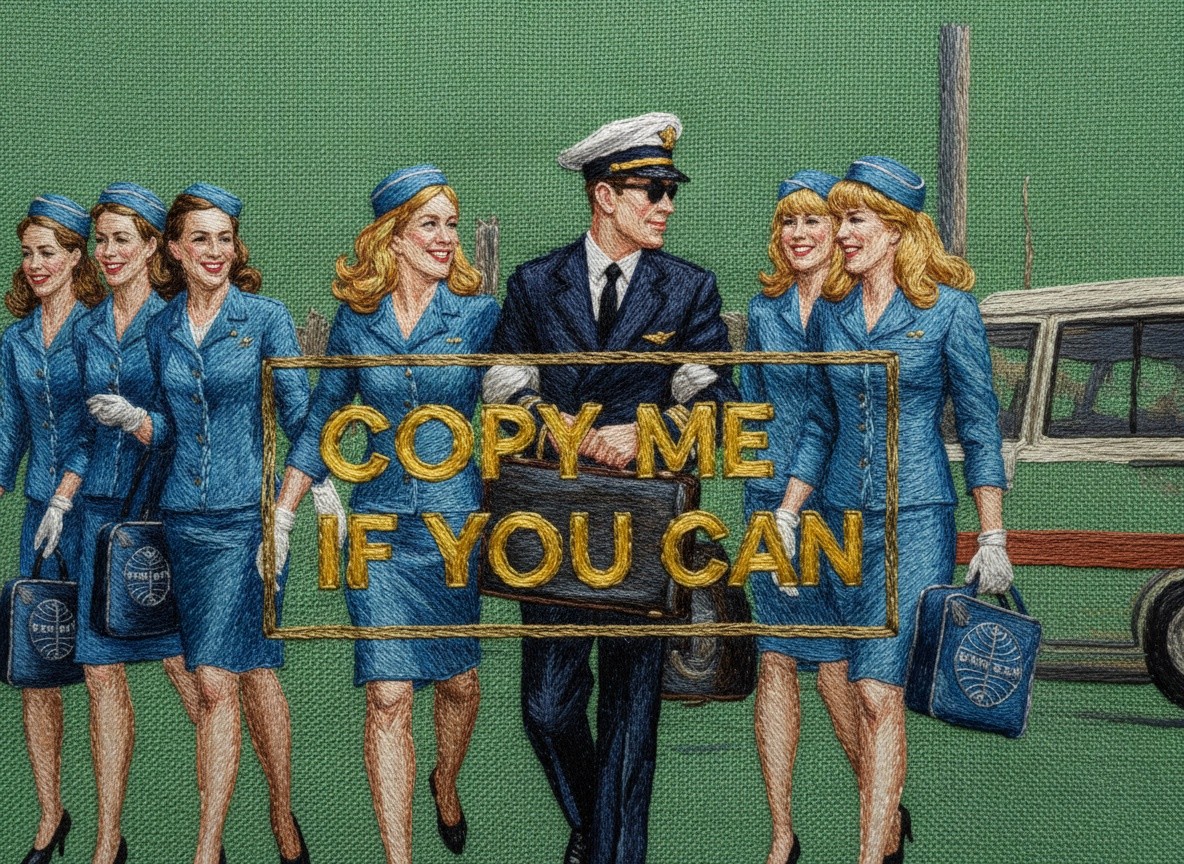
Copy Me If You Can


Be the first to know about every new letter.
No spam, unsubscribe anytime.
I heard something recently in my scrolls that stopped me in my tracks: “The human soul is no longer mysterious.”
We’re living in a time when data has cracked the code on a lot of what makes us… us. Not because we’re predictable robots—but because patterns exist. If you look close enough, ask the right questions, and mix in a little creativity, the patterns show themselves.
Every person still has flavor, flair, a way of being that’s impossible to duplicate, but that doesn’t mean we’re unknowable. Just like atoms can be studied, reactions can be mapped. Behavior can be understood.
Now, massive brands like Disney or Coca-Cola aren't the only ones who can manipulate behavior, we’re now in a world where your neighbor could run you through a prompt and figure out how to convince you of anything. Whether it’s to help you, to sell to you, or to understand you more deeply. This tool, this access, is now possible.
Let me show you what I mean.
The Candle That Closed the Deal
Imagine I’m hosting an open house—not just staging furniture, but crafting chemistry.
I light a specific candle: vanilla and sandalwood. Nothing overwhelming. Just enough to soften the space.
But this isn’t just about ambiance.
That candle is a chemical agent. The scent molecules bind to olfactory receptors in your brain. They activate the limbic system—your emotional center. They don’t just make you say, “This place feels nice.” They trigger dopamine. Comfort. A remembered feeling of safety you didn’t know you needed.
Now let’s add context. The guests are high-stress professionals. They crave stability. Their bodies already walked in carrying cortisol. But within minutes, they’re being subtly calmed—molecularly. Emotionally.
Then I input that into ChatGPT:
“Guests were exposed to vanilla and sandalwood scent. They are mostly mid-30s professionals, craving calm and security. What kind of language should I use in a follow-up text to nurture trust and encourage them to revisit the home?”
What I get back isn’t fluff. It’s a formula. It’s tone, phrasing, timing—all calibrated.
That’s not marketing anymore. That’s alchemy.
So what’s really happening here?
We’re standing at the edge of something big — a turning point where crime and creativity are about to collide in ways we’ve never seen before.
On one hand, these tools are making creativity instant. You can type a few words and create something that once took years. Imitation? It’s no longer flattery—it’s scalable, fast, and accessible to anyone.
On the other hand, the same tools can deceive. You can reverse-search a living room photo to find its exact location. Fabricate a brand’s voice. Mimic a person’s tone or facial expression with alarming precision.
That’s why we’re witnessing the rise of two internets:
The Public Internet – open, chaotic, and vulnerable.
The Private Internet – gated by trust, intention, and aligned values.
Think Substack. Think member-only Discords. Think velvet-rope communities where your words don’t get scraped, hijacked, or misunderstood.
When I use Substack to share my work, it’s more than publishing, it’s preservation. Behind that paywall is my creative fingerprint. Sure, others can copy it once they have it. Just like lending a favorite book. But at least I know the value came through the door, not through a back alley.
And I think that’s where this is all heading:
Toward velvet-rope digital spaces. Toward more respect for ownership, even if we’re still figuring out what that means in the AI age. Toward a world where you’ll want your community not just watching you — but choosing to walk through your gate.
So where does that leave us?
It means we’re entering an era where value isn’t just in what you create, but in how you protect it. Your words are DNA. Your prompts are property. And your style? That’s your signature.
So where does that leave us?
In a world where everything moves fast, the real edge isn’t speed, it’s intention. It’s knowing that not all visibility is value. Not every click is a connection.
That’s why I’m not just creating content anymore. I’m building behind the velvet rope. A place where strategy is quiet, ownership matters, and trust isn’t just earned, it’s protected.
Because when your digital fingerprint can be copied in seconds, you don’t need to shout louder—you need to build smarter.
So before you hit “publish,” ask yourself:
Is this just content… or is it craft? And who do I trust enough to let inside?
Let’s lead with purpose. And let the rest try to catch up.
Let's chat again soon...
I heard something recently in my scrolls that stopped me in my tracks: “The human soul is no longer mysterious.”
We’re living in a time when data has cracked the code on a lot of what makes us… us. Not because we’re predictable robots—but because patterns exist. If you look close enough, ask the right questions, and mix in a little creativity, the patterns show themselves.
Every person still has flavor, flair, a way of being that’s impossible to duplicate, but that doesn’t mean we’re unknowable. Just like atoms can be studied, reactions can be mapped. Behavior can be understood.
Now, massive brands like Disney or Coca-Cola aren't the only ones who can manipulate behavior, we’re now in a world where your neighbor could run you through a prompt and figure out how to convince you of anything. Whether it’s to help you, to sell to you, or to understand you more deeply. This tool, this access, is now possible.
Let me show you what I mean.
The Candle That Closed the Deal
Imagine I’m hosting an open house—not just staging furniture, but crafting chemistry.
I light a specific candle: vanilla and sandalwood. Nothing overwhelming. Just enough to soften the space.
But this isn’t just about ambiance.
That candle is a chemical agent. The scent molecules bind to olfactory receptors in your brain. They activate the limbic system—your emotional center. They don’t just make you say, “This place feels nice.” They trigger dopamine. Comfort. A remembered feeling of safety you didn’t know you needed.
Now let’s add context. The guests are high-stress professionals. They crave stability. Their bodies already walked in carrying cortisol. But within minutes, they’re being subtly calmed—molecularly. Emotionally.
Then I input that into ChatGPT:
“Guests were exposed to vanilla and sandalwood scent. They are mostly mid-30s professionals, craving calm and security. What kind of language should I use in a follow-up text to nurture trust and encourage them to revisit the home?”
What I get back isn’t fluff. It’s a formula. It’s tone, phrasing, timing—all calibrated.
That’s not marketing anymore. That’s alchemy.
So what’s really happening here?
We’re standing at the edge of something big — a turning point where crime and creativity are about to collide in ways we’ve never seen before.
On one hand, these tools are making creativity instant. You can type a few words and create something that once took years. Imitation? It’s no longer flattery—it’s scalable, fast, and accessible to anyone.
On the other hand, the same tools can deceive. You can reverse-search a living room photo to find its exact location. Fabricate a brand’s voice. Mimic a person’s tone or facial expression with alarming precision.
That’s why we’re witnessing the rise of two internets:
The Public Internet – open, chaotic, and vulnerable.
The Private Internet – gated by trust, intention, and aligned values.
Think Substack. Think member-only Discords. Think velvet-rope communities where your words don’t get scraped, hijacked, or misunderstood.
When I use Substack to share my work, it’s more than publishing, it’s preservation. Behind that paywall is my creative fingerprint. Sure, others can copy it once they have it. Just like lending a favorite book. But at least I know the value came through the door, not through a back alley.
And I think that’s where this is all heading:
Toward velvet-rope digital spaces. Toward more respect for ownership, even if we’re still figuring out what that means in the AI age. Toward a world where you’ll want your community not just watching you — but choosing to walk through your gate.
So where does that leave us?
It means we’re entering an era where value isn’t just in what you create, but in how you protect it. Your words are DNA. Your prompts are property. And your style? That’s your signature.
So where does that leave us?
In a world where everything moves fast, the real edge isn’t speed, it’s intention. It’s knowing that not all visibility is value. Not every click is a connection.
That’s why I’m not just creating content anymore. I’m building behind the velvet rope. A place where strategy is quiet, ownership matters, and trust isn’t just earned, it’s protected.
Because when your digital fingerprint can be copied in seconds, you don’t need to shout louder—you need to build smarter.
So before you hit “publish,” ask yourself:
Is this just content… or is it craft? And who do I trust enough to let inside?
Let’s lead with purpose. And let the rest try to catch up.
Let's chat again soon...
I heard something recently in my scrolls that stopped me in my tracks: “The human soul is no longer mysterious.”
We’re living in a time when data has cracked the code on a lot of what makes us… us. Not because we’re predictable robots—but because patterns exist. If you look close enough, ask the right questions, and mix in a little creativity, the patterns show themselves.
Every person still has flavor, flair, a way of being that’s impossible to duplicate, but that doesn’t mean we’re unknowable. Just like atoms can be studied, reactions can be mapped. Behavior can be understood.
Now, massive brands like Disney or Coca-Cola aren't the only ones who can manipulate behavior, we’re now in a world where your neighbor could run you through a prompt and figure out how to convince you of anything. Whether it’s to help you, to sell to you, or to understand you more deeply. This tool, this access, is now possible.
Let me show you what I mean.
The Candle That Closed the Deal
Imagine I’m hosting an open house—not just staging furniture, but crafting chemistry.
I light a specific candle: vanilla and sandalwood. Nothing overwhelming. Just enough to soften the space.
But this isn’t just about ambiance.
That candle is a chemical agent. The scent molecules bind to olfactory receptors in your brain. They activate the limbic system—your emotional center. They don’t just make you say, “This place feels nice.” They trigger dopamine. Comfort. A remembered feeling of safety you didn’t know you needed.
Now let’s add context. The guests are high-stress professionals. They crave stability. Their bodies already walked in carrying cortisol. But within minutes, they’re being subtly calmed—molecularly. Emotionally.
Then I input that into ChatGPT:
“Guests were exposed to vanilla and sandalwood scent. They are mostly mid-30s professionals, craving calm and security. What kind of language should I use in a follow-up text to nurture trust and encourage them to revisit the home?”
What I get back isn’t fluff. It’s a formula. It’s tone, phrasing, timing—all calibrated.
That’s not marketing anymore. That’s alchemy.
So what’s really happening here?
We’re standing at the edge of something big — a turning point where crime and creativity are about to collide in ways we’ve never seen before.
On one hand, these tools are making creativity instant. You can type a few words and create something that once took years. Imitation? It’s no longer flattery—it’s scalable, fast, and accessible to anyone.
On the other hand, the same tools can deceive. You can reverse-search a living room photo to find its exact location. Fabricate a brand’s voice. Mimic a person’s tone or facial expression with alarming precision.
That’s why we’re witnessing the rise of two internets:
The Public Internet – open, chaotic, and vulnerable.
The Private Internet – gated by trust, intention, and aligned values.
Think Substack. Think member-only Discords. Think velvet-rope communities where your words don’t get scraped, hijacked, or misunderstood.
When I use Substack to share my work, it’s more than publishing, it’s preservation. Behind that paywall is my creative fingerprint. Sure, others can copy it once they have it. Just like lending a favorite book. But at least I know the value came through the door, not through a back alley.
And I think that’s where this is all heading:
Toward velvet-rope digital spaces. Toward more respect for ownership, even if we’re still figuring out what that means in the AI age. Toward a world where you’ll want your community not just watching you — but choosing to walk through your gate.
So where does that leave us?
It means we’re entering an era where value isn’t just in what you create, but in how you protect it. Your words are DNA. Your prompts are property. And your style? That’s your signature.
So where does that leave us?
In a world where everything moves fast, the real edge isn’t speed, it’s intention. It’s knowing that not all visibility is value. Not every click is a connection.
That’s why I’m not just creating content anymore. I’m building behind the velvet rope. A place where strategy is quiet, ownership matters, and trust isn’t just earned, it’s protected.
Because when your digital fingerprint can be copied in seconds, you don’t need to shout louder—you need to build smarter.
So before you hit “publish,” ask yourself:
Is this just content… or is it craft? And who do I trust enough to let inside?
Let’s lead with purpose. And let the rest try to catch up.
Let's chat again soon...
My mission is to
Help you create and earn on your terms.
No spam, unsubscribe anytime.
My mission is to
Help you create and earn on your terms.
No spam, unsubscribe anytime.
My mission is to
Help you create and earn on your terms.
No spam, unsubscribe anytime.