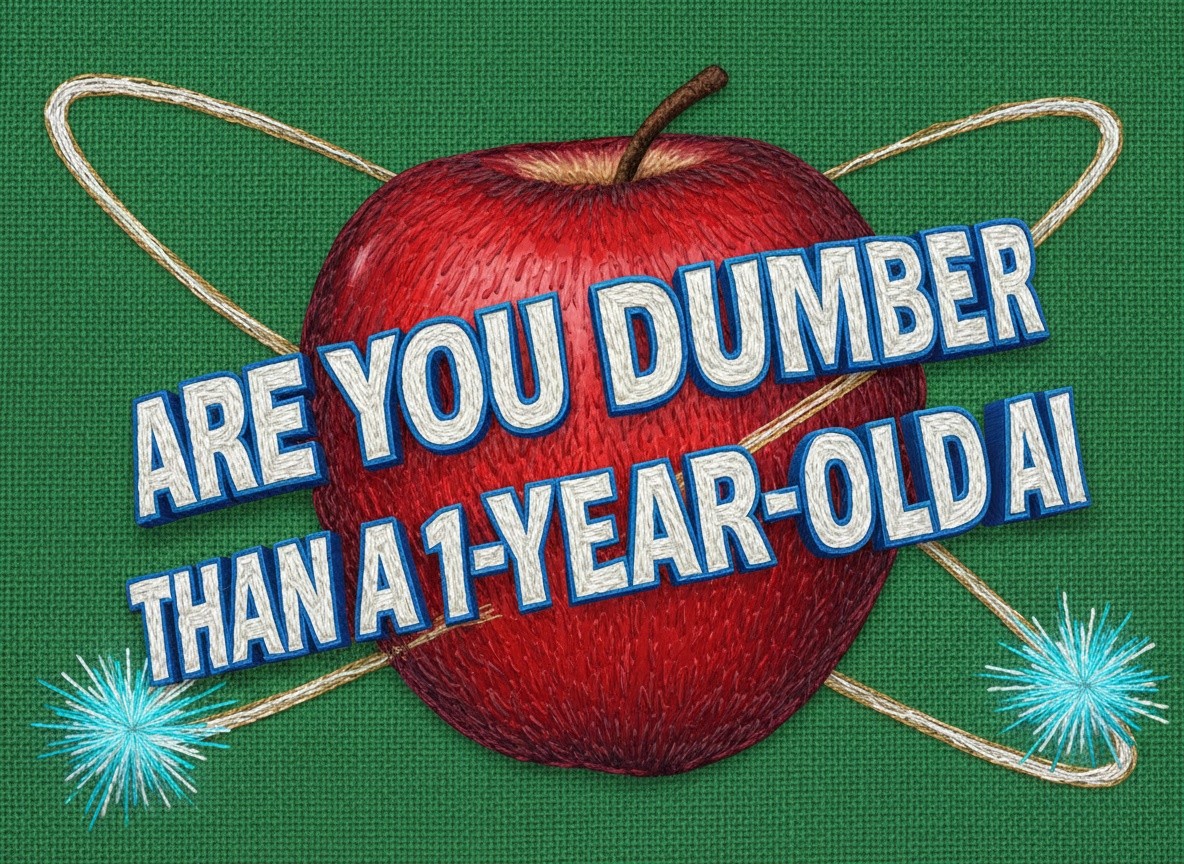
Are You Dumber Than a 1-Year-Old AI


Be the first to know about every new letter.
No spam, unsubscribe anytime.
Remember the show Are You Smarter Than a 5th Grader?—the one where adults get humbled by elementary school trivia and we all laugh (or cringe) as grown professionals stumble over the names of state capitals or the number of sides on a dodecagon?
It’s funny. But it's also a mirror.
That show reveals a collective anxiety: that not knowing something basic means you're less smart. But let’s challenge that idea. Because in a world accelerating with AI, real-time data, and voice-search everything... Is it more important to know the answer, or to know how to find the answer?
Question or Answer: Which One Is Smarter?
We live in a shifting ecosystem of assessments. From standardized testing to job performance reviews to social media hot takes, we’re constantly evaluated by what we “know.” Yet the landscape of intelligence has evolved—fast.
🧭 Knowing used to mean memorization. 📱 Today, knowing includes the ability to navigate. 🛠 Tomorrow, it will mean collaborating with machines.
The SXSW Moment That Changed My Thinking
At a panel on the global competitiveness of AI, one thing was made crystal clear: AI isn’t coming—it’s already clocked in, and it’s waiting for you at your next job. Businesses aren’t preparing for some distant tech future—they’re hiring now based on who can work with these tools. They’re investing in those who perform, optimize, and adapt—not those who simply recall.
So when the floor opened for questions, I asked:
“As businessmen, you say you want workers to use AI tools well. But students are being taught not to use them. How do we reassess how we assess?”
The question pulled on a deeper thread:
👉 We praise workers for finding answers with tools. 👉 We shame students for not memorizing them.
This contradiction isn’t just about education versus business. It’s about an outdated morality assigned to memory.
Are You Smarter Than a Search Engine?
My phone can get me to any destination faster than my grandfather map ever could. But if I don’t memorize the route, I’m labeled less smart or too dependent.
Is that fair? Is it even true?
My grandfather’s generation had maps. Mine has Google. His knowledge lived in his head. Mine lives in my ecosystem of access. Both are valid. Both solve problems. But only one is currently deemed “noble.”
This Is a Moral Moment of Disruption
The divide we’re witnessing isn’t just between tools and tradition—it’s between two types of thinkers:
The ones who value traditional systems of proving intelligence
And the ones who question the system itself
We’ve seen this tension throughout history—Beatniks versus Squares, Romantics against Enlightenment Thinkers, Dadaists and Surrealists clashing with pre-WWI Traditionalists, Industrialists opposing Transcendentalists. Every era stages its own battle between the past and what’s pushing forward.
This time, the stakes are higher. Because the future holds tools that could break generational cycles, democratize access, and build things we didn’t even know we needed.
Teach How to Ask, Not Just What to Answer
We don’t need to shame people for asking their phones. We need to teach people how to ask better questions— How to contextualize, how to connect dots, how to know what they don’t know.
Because the power of AI is not just in the answer it gives, but in the human who knows how to shape the question.
When we move from:
"What’s the right answer?" to "What’s the right question to ask?"
…we shift from Are You Smarter Than a 5th Grader to Are You Evolving With the Era You Live In?
What Comes Next?
With new tools at our fingertips, we can:
Build faster
Learn more deeply
Help more people
Ask questions that change entire systems
I believe we’re on the verge of a renaissance. Not just of knowledge, but of curiosity. Those who know how to use these tools I hope do not dominate, but uplift and innovate.
So next time you're caught not knowing the answer, don’t feel small. Feel powerful enough to ask something better.
— With questions, not conclusions.
Let's chat again soon...
Remember the show Are You Smarter Than a 5th Grader?—the one where adults get humbled by elementary school trivia and we all laugh (or cringe) as grown professionals stumble over the names of state capitals or the number of sides on a dodecagon?
It’s funny. But it's also a mirror.
That show reveals a collective anxiety: that not knowing something basic means you're less smart. But let’s challenge that idea. Because in a world accelerating with AI, real-time data, and voice-search everything... Is it more important to know the answer, or to know how to find the answer?
Question or Answer: Which One Is Smarter?
We live in a shifting ecosystem of assessments. From standardized testing to job performance reviews to social media hot takes, we’re constantly evaluated by what we “know.” Yet the landscape of intelligence has evolved—fast.
🧭 Knowing used to mean memorization. 📱 Today, knowing includes the ability to navigate. 🛠 Tomorrow, it will mean collaborating with machines.
The SXSW Moment That Changed My Thinking
At a panel on the global competitiveness of AI, one thing was made crystal clear: AI isn’t coming—it’s already clocked in, and it’s waiting for you at your next job. Businesses aren’t preparing for some distant tech future—they’re hiring now based on who can work with these tools. They’re investing in those who perform, optimize, and adapt—not those who simply recall.
So when the floor opened for questions, I asked:
“As businessmen, you say you want workers to use AI tools well. But students are being taught not to use them. How do we reassess how we assess?”
The question pulled on a deeper thread:
👉 We praise workers for finding answers with tools. 👉 We shame students for not memorizing them.
This contradiction isn’t just about education versus business. It’s about an outdated morality assigned to memory.
Are You Smarter Than a Search Engine?
My phone can get me to any destination faster than my grandfather map ever could. But if I don’t memorize the route, I’m labeled less smart or too dependent.
Is that fair? Is it even true?
My grandfather’s generation had maps. Mine has Google. His knowledge lived in his head. Mine lives in my ecosystem of access. Both are valid. Both solve problems. But only one is currently deemed “noble.”
This Is a Moral Moment of Disruption
The divide we’re witnessing isn’t just between tools and tradition—it’s between two types of thinkers:
The ones who value traditional systems of proving intelligence
And the ones who question the system itself
We’ve seen this tension throughout history—Beatniks versus Squares, Romantics against Enlightenment Thinkers, Dadaists and Surrealists clashing with pre-WWI Traditionalists, Industrialists opposing Transcendentalists. Every era stages its own battle between the past and what’s pushing forward.
This time, the stakes are higher. Because the future holds tools that could break generational cycles, democratize access, and build things we didn’t even know we needed.
Teach How to Ask, Not Just What to Answer
We don’t need to shame people for asking their phones. We need to teach people how to ask better questions— How to contextualize, how to connect dots, how to know what they don’t know.
Because the power of AI is not just in the answer it gives, but in the human who knows how to shape the question.
When we move from:
"What’s the right answer?" to "What’s the right question to ask?"
…we shift from Are You Smarter Than a 5th Grader to Are You Evolving With the Era You Live In?
What Comes Next?
With new tools at our fingertips, we can:
Build faster
Learn more deeply
Help more people
Ask questions that change entire systems
I believe we’re on the verge of a renaissance. Not just of knowledge, but of curiosity. Those who know how to use these tools I hope do not dominate, but uplift and innovate.
So next time you're caught not knowing the answer, don’t feel small. Feel powerful enough to ask something better.
— With questions, not conclusions.
Let's chat again soon...
Remember the show Are You Smarter Than a 5th Grader?—the one where adults get humbled by elementary school trivia and we all laugh (or cringe) as grown professionals stumble over the names of state capitals or the number of sides on a dodecagon?
It’s funny. But it's also a mirror.
That show reveals a collective anxiety: that not knowing something basic means you're less smart. But let’s challenge that idea. Because in a world accelerating with AI, real-time data, and voice-search everything... Is it more important to know the answer, or to know how to find the answer?
Question or Answer: Which One Is Smarter?
We live in a shifting ecosystem of assessments. From standardized testing to job performance reviews to social media hot takes, we’re constantly evaluated by what we “know.” Yet the landscape of intelligence has evolved—fast.
🧭 Knowing used to mean memorization. 📱 Today, knowing includes the ability to navigate. 🛠 Tomorrow, it will mean collaborating with machines.
The SXSW Moment That Changed My Thinking
At a panel on the global competitiveness of AI, one thing was made crystal clear: AI isn’t coming—it’s already clocked in, and it’s waiting for you at your next job. Businesses aren’t preparing for some distant tech future—they’re hiring now based on who can work with these tools. They’re investing in those who perform, optimize, and adapt—not those who simply recall.
So when the floor opened for questions, I asked:
“As businessmen, you say you want workers to use AI tools well. But students are being taught not to use them. How do we reassess how we assess?”
The question pulled on a deeper thread:
👉 We praise workers for finding answers with tools. 👉 We shame students for not memorizing them.
This contradiction isn’t just about education versus business. It’s about an outdated morality assigned to memory.
Are You Smarter Than a Search Engine?
My phone can get me to any destination faster than my grandfather map ever could. But if I don’t memorize the route, I’m labeled less smart or too dependent.
Is that fair? Is it even true?
My grandfather’s generation had maps. Mine has Google. His knowledge lived in his head. Mine lives in my ecosystem of access. Both are valid. Both solve problems. But only one is currently deemed “noble.”
This Is a Moral Moment of Disruption
The divide we’re witnessing isn’t just between tools and tradition—it’s between two types of thinkers:
The ones who value traditional systems of proving intelligence
And the ones who question the system itself
We’ve seen this tension throughout history—Beatniks versus Squares, Romantics against Enlightenment Thinkers, Dadaists and Surrealists clashing with pre-WWI Traditionalists, Industrialists opposing Transcendentalists. Every era stages its own battle between the past and what’s pushing forward.
This time, the stakes are higher. Because the future holds tools that could break generational cycles, democratize access, and build things we didn’t even know we needed.
Teach How to Ask, Not Just What to Answer
We don’t need to shame people for asking their phones. We need to teach people how to ask better questions— How to contextualize, how to connect dots, how to know what they don’t know.
Because the power of AI is not just in the answer it gives, but in the human who knows how to shape the question.
When we move from:
"What’s the right answer?" to "What’s the right question to ask?"
…we shift from Are You Smarter Than a 5th Grader to Are You Evolving With the Era You Live In?
What Comes Next?
With new tools at our fingertips, we can:
Build faster
Learn more deeply
Help more people
Ask questions that change entire systems
I believe we’re on the verge of a renaissance. Not just of knowledge, but of curiosity. Those who know how to use these tools I hope do not dominate, but uplift and innovate.
So next time you're caught not knowing the answer, don’t feel small. Feel powerful enough to ask something better.
— With questions, not conclusions.
Let's chat again soon...
My mission is to
Help you create and earn on your terms.
No spam, unsubscribe anytime.
My mission is to
Help you create and earn on your terms.
No spam, unsubscribe anytime.
My mission is to
Help you create and earn on your terms.
No spam, unsubscribe anytime.