5 Ways to Ask for Help
Be the first to know about every new letter.
No spam, unsubscribe anytime.
A lot of people don’t know how to ask for help.
Not because they’re incapable, but because they don’t know what they need help with in the first place.
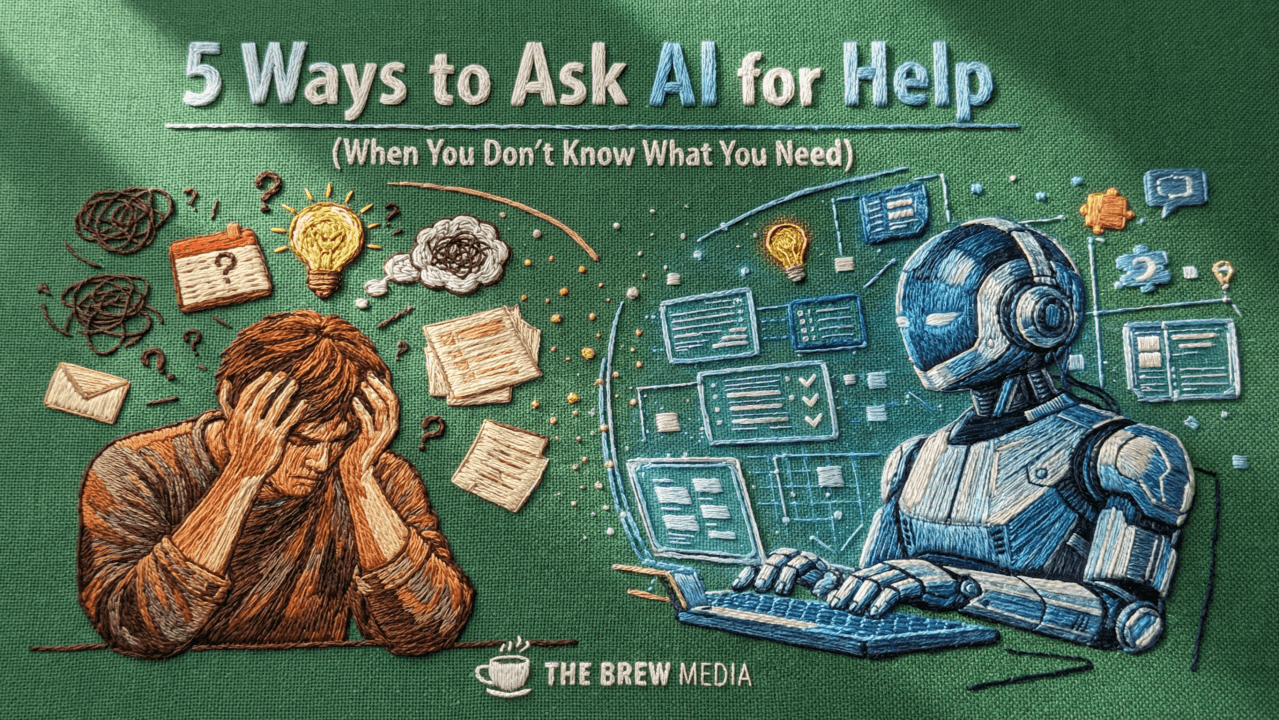
AI will help you… but only if you give it something to work with.
Think of AI less like a search engine and more like a assistant that organizes your thoughts as you go.
5 Ways to Get Help (Even When You Don’t Know What You Need)
1. The “Messy Brain Dump” Method
Use when: your thoughts feel heavy, scattered, or overwhelming.
Most people wait until their thoughts are organized before they ask for help. That’s the mistake.
Prompt:
“Here’s everything in my head right now. It’s messy and unorganized. Break this into categories, problems, and potential next steps.”
or
“Highlight what matters vs. what is just noise.”
Now you’re not just organizing, you’re prioritizing.
2. The “Act As Me” Prompt
Use when: you don’t know what questions to ask or feel stuck in your own perspective.
Prompt:
“Act as me a [insert your role]. Ask me the questions I should be asking to move forward.”
What this actually does: It externalizes your internal dialogue. You move from passive thinking → active discovery.
Upgrade it:
“Then rank the questions by impact if I answered them.”
Now you know what actually matters.
3. The “Give Me Options I Haven’t Considered” Trigger
Use when: you feel stuck between the same 2–3 ideas.
Most people aren’t stuck because they lack ideas. They’re stuck because they’re looping the same ideas.
“Based on what I’ve said, give me 5 directions I haven’t considered — including unconventional or uncomfortable ones.”
What this actually does: It breaks cognitive bias. You stop recycling and start expanding.
Upgrade it:
“Label each option as safe, strategic, or risky.”
Now you’re not just exploring, you’re evaluating.
4. The “Fix My Blind Spots” Command
Use when: something feels off, but you can’t identify why.
This is where AI becomes uncomfortable… and useful.
“What am I not seeing here? Where am I being unclear, avoidant, or unrealistic?”
What this actually does: It shortcuts self-awareness. It points to the gap between your intention and your execution.
Upgrade it:
“Be direct. Don’t soften it.”
Now you’re not just getting feedback — you’re getting truth.
5. The “Build While I Think” Method
Use when: you procrastinate because you feel like you need a full plan first.
You don’t.
“I’m going to keep typing thoughts. Build and refine a plan as I go. Update it in real time.”
What this actually does: It removes the pause between thinking and doing. You create momentum while you figure it out.
Upgrade it:
“Turn the evolving plan into actionable steps I can start immediately.”
Now thinking becomes execution.
The Takeaway
You don’t need to be articulate. You don’t need to be certain. You don’t even need to be aware.
You just need to start looking for ways to ask for help.
Let’s chat again soon…
Gibz
My mission is to
Help you create and earn on your terms.
No spam, unsubscribe anytime.