From Merchants To MrBeast


Be the first to know about every new letter.
No spam, unsubscribe anytime.
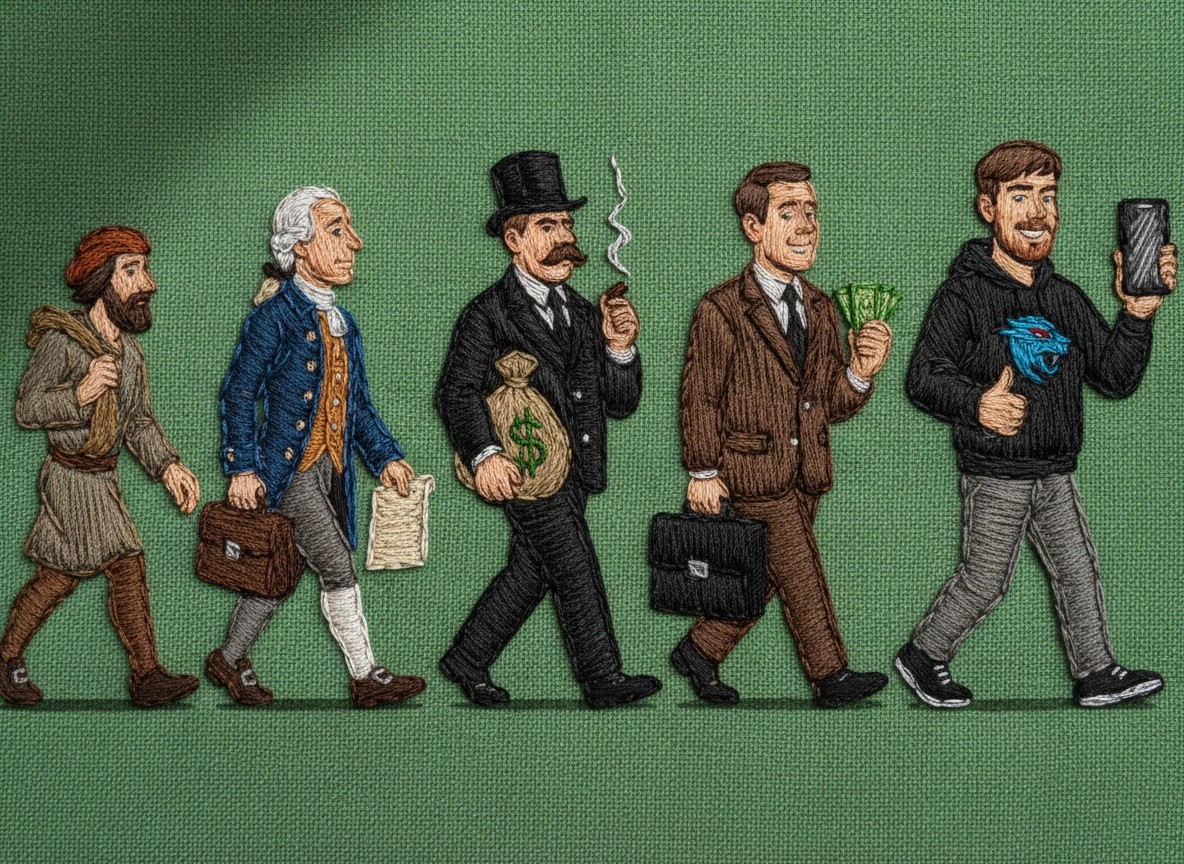
For centuries, wealth followed structure. Whether feudal, colonial, industrial, or corporate—money flowed upward. The elite remained protected by distance, law, and gatekeeping systems that favored inheritance, exploitation, and control.
But today, a new model is breaking centuries of precedent:
Wealth is no longer inherited. It’s elected. And the electorate? The internet.
A BRIEF HISTORY OF ECONOMIC POWER STRUCTURES
To understand where we are, let’s look back.
Feudal Era (9th–15th centuries): Wealth was tied to land. Kings owned, lords managed, peasants labored. Social mobility was virtually nonexistent.
Merchant & Colonial Eras (16th–18th centuries): Trade routes and empires created merchant classes, but success still relied on systemic violence and monopoly (e.g., East India Company).
Industrial Revolution (19th century): Manufacturing and mechanization created new wealth. Still, corporate owners profited, while laborers were interchangeable.
20th Century Corporate Capitalism: The rise of multinational companies solidified corporate gatekeeping. Advertising and media were tightly controlled. Celebrities emerged, but the public had no power over who rose or fell.
Then the internet happened.
THE RISE OF THE DIGITAL COMMONS
From 1997–2007, platforms like YouTube, blogs, Myspace, and early social media began democratizing content. But infrastructure for wealth creation was still clunky. It wasn’t until 2010–2015—with the mainstreaming of smartphones, digital payment systems, and creator-specific monetization—that something truly historic happened:
The attention economy became monetizable. Not only could anyone speak, but now they could earn.
YouTube AdSense, Patreon, affiliate marketing, and direct-to-consumer brands allowed everyday people to generate income—sometimes millions—without ever asking for permission.
CASE STUDY: MRBEAST AND THE NEW MIDDLE CLASS OF MILLIONAIRES
Jimmy Donaldson, better known as MrBeast, didn’t build a company in the traditional sense. He built a channel. A persona. A narrative.
What began as videos of him counting to 100,000 turned into a media empire generating tens of millions per month.
Revenue Breakdown (2024 est.):
YouTube Ads: $3–5M/month
Brand Sponsorships: $2–3M/month
Feastables (product line): $10–15M/month
Merch + Licensing: Variable, but climbing
Yet MrBeast’s empire is fragile by design. It is wholly dependent on attention. If people stop watching, the system collapses.
In this model, the audience is not just the consumer. They are the board of directors. This is wealth built by consensus—a new phenomenon in economic history.
THE FRACTURE: WHEN PEOPLE FLY TOO HIGH
But what happens when systems get too big, too fast? Historically, trust collapses.
The Roman Empire. The French aristocracy. Wall Street in 2008. Any time wealth gets too consolidated or too detached from the public, the public revolts.
Today, we’re entering another such phase.
Digital fatigue, AI confusion, and content oversaturation are creating emotional vertigo for consumers. We’ve flown too high. We can’t see the ground. And as any historian will tell you:
Panic follows altitude.
This is not just a psychological issue. It’s a predictable sociopolitical correction.
Consumers will soon:
Pull away from platforms that feel manipulative or overwhelming.
Re-center trust in individuals who were authentic before the collapse.
Abandon shallow influencers for deeper community-based leaders.
And here’s the twist: many early creators, like MrBeast or Emma Chamberlain, will begin to resemble corporations, even if they were born from rebellion. But because they were pre-collapse, they’ll retain trust—much like early U.S. founding fathers after the monarchy fell.
WHAT THIS MEANS FOR YOU
If you're a small business owner still relying on foot traffic and print ads, you're not just behind. You're historically out of sync.
But you’re not doomed.
The modern consumer is not loyal to the biggest. They’re loyal to the most human.
You don’t need to become an influencer. You need to become documented, discoverable, and trustworthy in the digital commons.
Just as merchant classes disrupted feudalism, and newspapers disrupted monarchies, the creator economy is disrupting corporate capitalism.
CLOSING THOUGHTS
We are not in an era of random fame. We are in an era of intentional visibility. Those who understand how to be seen while staying true to their voice will not just survive the shift—they will become its architects.
And when the fear settles, and people begin rebuilding trust again, they will look for you—the small, steady, honest brand that never tried to trick them.
For centuries, wealth followed structure. Whether feudal, colonial, industrial, or corporate—money flowed upward. The elite remained protected by distance, law, and gatekeeping systems that favored inheritance, exploitation, and control.
But today, a new model is breaking centuries of precedent:
Wealth is no longer inherited. It’s elected. And the electorate? The internet.
A BRIEF HISTORY OF ECONOMIC POWER STRUCTURES
To understand where we are, let’s look back.
Feudal Era (9th–15th centuries): Wealth was tied to land. Kings owned, lords managed, peasants labored. Social mobility was virtually nonexistent.
Merchant & Colonial Eras (16th–18th centuries): Trade routes and empires created merchant classes, but success still relied on systemic violence and monopoly (e.g., East India Company).
Industrial Revolution (19th century): Manufacturing and mechanization created new wealth. Still, corporate owners profited, while laborers were interchangeable.
20th Century Corporate Capitalism: The rise of multinational companies solidified corporate gatekeeping. Advertising and media were tightly controlled. Celebrities emerged, but the public had no power over who rose or fell.
Then the internet happened.
THE RISE OF THE DIGITAL COMMONS
From 1997–2007, platforms like YouTube, blogs, Myspace, and early social media began democratizing content. But infrastructure for wealth creation was still clunky. It wasn’t until 2010–2015—with the mainstreaming of smartphones, digital payment systems, and creator-specific monetization—that something truly historic happened:
The attention economy became monetizable. Not only could anyone speak, but now they could earn.
YouTube AdSense, Patreon, affiliate marketing, and direct-to-consumer brands allowed everyday people to generate income—sometimes millions—without ever asking for permission.
CASE STUDY: MRBEAST AND THE NEW MIDDLE CLASS OF MILLIONAIRES
Jimmy Donaldson, better known as MrBeast, didn’t build a company in the traditional sense. He built a channel. A persona. A narrative.
What began as videos of him counting to 100,000 turned into a media empire generating tens of millions per month.
Revenue Breakdown (2024 est.):
YouTube Ads: $3–5M/month
Brand Sponsorships: $2–3M/month
Feastables (product line): $10–15M/month
Merch + Licensing: Variable, but climbing
Yet MrBeast’s empire is fragile by design. It is wholly dependent on attention. If people stop watching, the system collapses.
In this model, the audience is not just the consumer. They are the board of directors. This is wealth built by consensus—a new phenomenon in economic history.
THE FRACTURE: WHEN PEOPLE FLY TOO HIGH
But what happens when systems get too big, too fast? Historically, trust collapses.
The Roman Empire. The French aristocracy. Wall Street in 2008. Any time wealth gets too consolidated or too detached from the public, the public revolts.
Today, we’re entering another such phase.
Digital fatigue, AI confusion, and content oversaturation are creating emotional vertigo for consumers. We’ve flown too high. We can’t see the ground. And as any historian will tell you:
Panic follows altitude.
This is not just a psychological issue. It’s a predictable sociopolitical correction.
Consumers will soon:
Pull away from platforms that feel manipulative or overwhelming.
Re-center trust in individuals who were authentic before the collapse.
Abandon shallow influencers for deeper community-based leaders.
And here’s the twist: many early creators, like MrBeast or Emma Chamberlain, will begin to resemble corporations, even if they were born from rebellion. But because they were pre-collapse, they’ll retain trust—much like early U.S. founding fathers after the monarchy fell.
WHAT THIS MEANS FOR YOU
If you're a small business owner still relying on foot traffic and print ads, you're not just behind. You're historically out of sync.
But you’re not doomed.
The modern consumer is not loyal to the biggest. They’re loyal to the most human.
You don’t need to become an influencer. You need to become documented, discoverable, and trustworthy in the digital commons.
Just as merchant classes disrupted feudalism, and newspapers disrupted monarchies, the creator economy is disrupting corporate capitalism.
CLOSING THOUGHTS
We are not in an era of random fame. We are in an era of intentional visibility. Those who understand how to be seen while staying true to their voice will not just survive the shift—they will become its architects.
And when the fear settles, and people begin rebuilding trust again, they will look for you—the small, steady, honest brand that never tried to trick them.
For centuries, wealth followed structure. Whether feudal, colonial, industrial, or corporate—money flowed upward. The elite remained protected by distance, law, and gatekeeping systems that favored inheritance, exploitation, and control.
But today, a new model is breaking centuries of precedent:
Wealth is no longer inherited. It’s elected. And the electorate? The internet.
A BRIEF HISTORY OF ECONOMIC POWER STRUCTURES
To understand where we are, let’s look back.
Feudal Era (9th–15th centuries): Wealth was tied to land. Kings owned, lords managed, peasants labored. Social mobility was virtually nonexistent.
Merchant & Colonial Eras (16th–18th centuries): Trade routes and empires created merchant classes, but success still relied on systemic violence and monopoly (e.g., East India Company).
Industrial Revolution (19th century): Manufacturing and mechanization created new wealth. Still, corporate owners profited, while laborers were interchangeable.
20th Century Corporate Capitalism: The rise of multinational companies solidified corporate gatekeeping. Advertising and media were tightly controlled. Celebrities emerged, but the public had no power over who rose or fell.
Then the internet happened.
THE RISE OF THE DIGITAL COMMONS
From 1997–2007, platforms like YouTube, blogs, Myspace, and early social media began democratizing content. But infrastructure for wealth creation was still clunky. It wasn’t until 2010–2015—with the mainstreaming of smartphones, digital payment systems, and creator-specific monetization—that something truly historic happened:
The attention economy became monetizable. Not only could anyone speak, but now they could earn.
YouTube AdSense, Patreon, affiliate marketing, and direct-to-consumer brands allowed everyday people to generate income—sometimes millions—without ever asking for permission.
CASE STUDY: MRBEAST AND THE NEW MIDDLE CLASS OF MILLIONAIRES
Jimmy Donaldson, better known as MrBeast, didn’t build a company in the traditional sense. He built a channel. A persona. A narrative.
What began as videos of him counting to 100,000 turned into a media empire generating tens of millions per month.
Revenue Breakdown (2024 est.):
YouTube Ads: $3–5M/month
Brand Sponsorships: $2–3M/month
Feastables (product line): $10–15M/month
Merch + Licensing: Variable, but climbing
Yet MrBeast’s empire is fragile by design. It is wholly dependent on attention. If people stop watching, the system collapses.
In this model, the audience is not just the consumer. They are the board of directors. This is wealth built by consensus—a new phenomenon in economic history.
THE FRACTURE: WHEN PEOPLE FLY TOO HIGH
But what happens when systems get too big, too fast? Historically, trust collapses.
The Roman Empire. The French aristocracy. Wall Street in 2008. Any time wealth gets too consolidated or too detached from the public, the public revolts.
Today, we’re entering another such phase.
Digital fatigue, AI confusion, and content oversaturation are creating emotional vertigo for consumers. We’ve flown too high. We can’t see the ground. And as any historian will tell you:
Panic follows altitude.
This is not just a psychological issue. It’s a predictable sociopolitical correction.
Consumers will soon:
Pull away from platforms that feel manipulative or overwhelming.
Re-center trust in individuals who were authentic before the collapse.
Abandon shallow influencers for deeper community-based leaders.
And here’s the twist: many early creators, like MrBeast or Emma Chamberlain, will begin to resemble corporations, even if they were born from rebellion. But because they were pre-collapse, they’ll retain trust—much like early U.S. founding fathers after the monarchy fell.
WHAT THIS MEANS FOR YOU
If you're a small business owner still relying on foot traffic and print ads, you're not just behind. You're historically out of sync.
But you’re not doomed.
The modern consumer is not loyal to the biggest. They’re loyal to the most human.
You don’t need to become an influencer. You need to become documented, discoverable, and trustworthy in the digital commons.
Just as merchant classes disrupted feudalism, and newspapers disrupted monarchies, the creator economy is disrupting corporate capitalism.
CLOSING THOUGHTS
We are not in an era of random fame. We are in an era of intentional visibility. Those who understand how to be seen while staying true to their voice will not just survive the shift—they will become its architects.
And when the fear settles, and people begin rebuilding trust again, they will look for you—the small, steady, honest brand that never tried to trick them.
My mission is to
Help you create and earn on your terms.
No spam, unsubscribe anytime.
My mission is to
Help you create and earn on your terms.
No spam, unsubscribe anytime.
My mission is to
Help you create and earn on your terms.
No spam, unsubscribe anytime.